Implant Overdentures
An implant overdenture, also known as an implant-retained denture, is a removable denture that attaches to two or four dental implants to improve stability when eating and speaking. At Face Clinic, the prosthesis is planned by clinicians experienced in implant-supported rehabilitation and the implants are placed by oral and maxillofacial surgeons, with conscious sedation available when appropriate.
- 2 or 4 implants per arch Two may be sufficient in the lower jaw; four are generally used in the upper jaw
- Bar or Locator attachments Two different ways of retaining the removable denture on the implants
- Removable You remove the denture yourself for cleaning and at night
- Operating theatre and sedation Conscious sedation with an anaesthetist in Madrid and Salamanca
What implant overdentures are for
A removable denture that stays securely in place
An implant overdenture is a complete removable denture that attaches to dental implants rather than relying solely on suction and contact with the gums. In the lower jaw, two implants may provide sufficient retention in selected patients. In the upper jaw, and when greater stability is required in the lower jaw, an overdenture retained by four implants is generally used. The denture still rests partly on the gums and is removed by the patient for cleaning.
Implant-retained dentures are primarily intended for people who have lost all the teeth in one arch and find that a conventional denture moves, causes sore areas or makes eating difficult. This is particularly common in the lower jaw, where the tongue and progressive loss of jawbone can make a conventional lower denture increasingly unstable.
They may also be considered when there is insufficient bone, or when a patient does not wish to undergo the more extensive treatment required for a fixed full-arch restoration.
An overdenture is not the same as a fixed implant bridge. With All on Four dental implants, for example, the prosthesis is screwed to the implants and can only be removed by the dental team. An overdenture requires fewer implants and generally costs less, but remains removable and feels more like a denture than fixed teeth.
At Face Clinic, we use 3D dental imaging to assess how much bone remains and where it is located. We also assess your existing denture and explain whether an implant overdenture, a fixed implant-supported restoration or a conventional removable denture is more appropriate for your case.
Patient reviews
Top Doctors · Verified patient · Translated from Spanish
My dentist referred me to Dr Riba because severe bone resorption made implant treatment difficult. Thanks to an upper overdenture supported by four implants, I can now eat normally, smile and have regained a quality of life I thought I had lost.L.G. · Top Doctors
Google · Patient review · Translated from Spanish
Very good. I was extremely pleased with the care and the results.David García Sánchez · Google
Google · Patient review · Translated from Spanish
Excellent care from the whole team and an excellent result. Completely recommended.Ana María Martínez González · Google
Types of implant overdentures
How many implants are used and how the denture attaches
Implant overdentures differ mainly in the number of implants used and in the attachment system connecting the denture to them. Both factors affect retention, how much support still comes from the gums and the maintenance required.
The upper and lower jaws are treated differently. In the lower jaw, two implants may provide adequate retention in selected patients. In the upper jaw, four implants are generally used because the bone is usually less dense and the prosthesis requires broader support.
Lower overdenture on 2 implants
Two implants placed in the front part of the lower jaw can substantially improve the stability of a lower denture. This is one of the simplest implant-retained options for patients who have no teeth in the mandible.
Overdenture on 4 implants
Four implants are generally used for an upper implant overdenture and may also be selected in the lower jaw when greater retention is required. With four support points, the denture can be more stable and, in some upper-jaw cases, may be designed with less palatal coverage.
Locator-retained overdenture
Each implant carries a small attachment known as a Locator. Corresponding components inside the denture snap onto these attachments. Locator systems are relatively straightforward to clean and maintain, and the retentive inserts can be replaced when they wear and become less secure.
Bar-retained overdenture
A metal bar joins the implants and the denture clips onto the bar. This system can provide greater retention and helps distribute forces between the implants, although it is generally more complex and requires careful cleaning beneath and around the bar.
How implant overdenture treatment works
The implants first, then the removable denture
The implants are placed surgically and allowed to integrate with the bone. During this period, you can usually continue wearing an appropriately adjusted denture. Once healing is complete, the overdenture is connected to the implants or a new denture is made.
-
01 · Diagnosis 3D imaging and assessment of your existing denture
A dental CBCT scan shows how much bone is available for implant placement. We also assess your current denture because, in some cases, it may be possible to adapt or reuse it.
-
02 · Planning Number of implants and attachment system
We determine whether two or four implants are appropriate and whether the overdenture will use individual Locator attachments or a bar. You receive the treatment plan and written quotation before proceeding.
-
03 · Surgery Placement of the dental implants
Implant placement is carried out under local anaesthetic, with conscious sedation monitored by an anaesthetist available when appropriate. If teeth need to be removed, extractions may sometimes be performed during the same procedure.
-
04 · Osseointegration An adjusted denture during healing
The implants are allowed to integrate with the jawbone over the following months. Your denture can be relined or adjusted so that it does not place excessive pressure over the healing implants.
-
05 · Overdenture Attachment and follow-up
Once integration has been confirmed, the Locator attachments or bar are connected and the overdenture is fitted. Follow-up visits are used to check retention, comfort and the condition of the attachment components.
Benefits of implant overdentures
And the limitations to consider
Compared with a conventional removable denture, an implant overdenture provides substantially greater stability. Compared with a fixed implant-supported restoration, it generally requires fewer implants, is easier to remove for cleaning and usually involves a lower overall cost, although it remains a removable prosthesis.
-
Greater denture stability
The implant attachments help prevent the denture from lifting or moving during eating, speaking or laughing.
-
No denture adhesive required
Implant retention reduces or eliminates the need for adhesive pastes or powders used to stabilise conventional dentures.
-
More efficient chewing
Chewing is generally more stable than with a conventional denture, although an overdenture does not provide exactly the same function as a fixed implant-supported bridge.
-
Fewer implants and lower cost
An overdenture can often be retained with two or four implants, making it a less extensive option than many fixed full-arch restorations.
-
Easier to clean
The overdenture is removed for cleaning, allowing both the denture and the implant attachments to be cleaned separately.
-
Requires ongoing maintenance
Retentive inserts and clips wear over time and may need replacement. As the gums and jawbone change, the denture may also require relining or eventual replacement.
Implant overdenture specialists
Oral and maxillofacial surgeons and prosthetic specialists
Implant overdentures work best when the implants are positioned according to the requirements of the future prosthesis. For this reason, implant placement and denture design are planned together by the surgical and restorative teams.

Oral and Maxillofacial Surgery · Medical Director
Dr Francisco Riba García
Founder and Medical Director of Face Clinic. Specialist in Oral and Maxillofacial Surgery, trained at Hospital General Universitario Gregorio Marañón and Fellow of the European Board of Oro-Maxillo-Facial Surgery. Head of the Maxillofacial Surgery Department at Hospital La Moraleja.
ICOMEM 28375865
View medical profile
Dr María Ciudad Cano
Dentistry and oral rehabilitation · implant-supported prostheses
COEM 28008362
View profile
Dr Pilar Gómez de Liaño
Implant dentistry, dental rehabilitation and oral surgery · Salamanca
Registration no. 05006564
View profile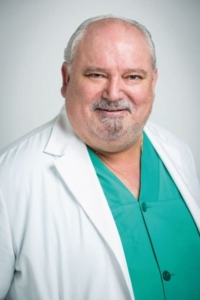
Dr Matías Cuesta Gil
Oral and Maxillofacial Surgery · advanced implant dentistry
ICOMEM 132836304
View profile
Dr Eduardo Monteserín Martínez
Oral and Maxillofacial Surgery · implant dentistry and full-arch rehabilitation
ICOMEM 282873798
View profile
Dr Gema Arenas de Frutos
Oral and Maxillofacial Surgery · Fellow EBOMFS
ICOMEM 282869570
View profile
Frequently asked questions about implant overdentures
What patients most often ask us
What an overdenture is, implant overdenture cost, eating and sleeping with the denture, how long it lasts, upper overdentures and the difference between removable and fixed implant-supported teeth.
What is an overdenture?
An overdenture is a removable denture that is retained by dental implants rather than relying only on the gums for support and stability. The denture attaches to the implants using individual attachments, such as Locators, or a connecting bar. It is removed by the patient for cleaning.
What is an overdenture on 4 implants?
It is a complete removable denture retained by four dental implants using Locator attachments or a bar. Four implants are commonly used for upper overdentures and may also be chosen in the lower jaw when greater retention is required. It is not a fixed bridge: the patient removes it for cleaning.
How much do implant overdentures cost?
As an indicative Face Clinic reference, an overdenture supported by four implants costs approximately €4,800 to €6,400 per arch, including the implants and denture. Treatment using two implants is less expensive and may start from approximately €3,200. A bar-retained design generally costs more than a Locator-retained overdenture, and the total price may increase if extractions or bone grafting are required. A personalised written quotation is provided after clinical and 3D radiological assessment.
Can you eat normally with an implant overdenture?
Most patients can eat a much wider range of foods than with an unstable conventional denture because the implants help prevent the prosthesis from moving. Very hard foods are still best cut into smaller pieces, and biting extremely hard items directly with the front teeth should be avoided. There is also an adaptation period during the first weeks.
Can you sleep with an implant overdenture?
It is generally advisable to remove the overdenture at night. This allows the gums and implant area to rest and makes it possible to clean the denture thoroughly. Removing the prosthesis overnight can also reduce the risk of inflammation and fungal infection beneath it. Individual advice may differ in specific clinical situations.
How long do implant overdentures last?
Dental implants can remain functional for many years when they are healthy and properly maintained. The removable denture itself may need relining, adjustment or eventual replacement because the gums and underlying jawbone continue to change and the prosthetic teeth wear over time. Locator inserts or bar clips usually need replacing more frequently as their retention gradually reduces.
Can an upper overdenture be supported by only 2 implants?
Two implants are not normally the preferred configuration for an upper overdenture. Upper-jaw bone is generally less dense and the prosthesis is subject to different biomechanical forces, so four implants are usually used to provide broader and more predictable retention.
Implant overdenture or fixed implant bridge?
An implant overdenture is removable, usually requires fewer implants and generally costs less. A fixed restoration, such as All on Four, is screwed to the implants and can only be removed by the dental team. Fixed teeth generally feel more similar to natural teeth but require a different anatomical and prosthetic situation and involve a greater investment. The most appropriate option depends on the amount of bone, functional requirements, hygiene, treatment complexity and patient priorities.
Where does Face Clinic provide implant overdentures?
Face Clinic assesses and provides implant overdenture treatment at its two Madrid clinics, Barrio de Salamanca and Aravaca-Pozuelo, and at Face Clinic Salamanca. Implant surgery is carried out in appropriately equipped surgical facilities in Madrid or Salamanca.
Face Clinic clinics
Find the clinic that suits you
We provide implant overdenture treatment at our two Madrid clinics and in Salamanca. If you already wear a denture, bring it to your first consultation: in some cases, it may be possible to adapt or reuse it as part of your treatment.


Related treatments
If you are considering an implant overdenture, these options may also be relevant
Fixed implant-supported alternatives and conventional complete dentures without implants.
A fixed full-arch bridge screwed onto four implants and removed only by the dental team.
View All on FourResin teeth supported by a reinforcing framework that is screwed onto dental implants.
A conventional complete denture supported by the gums without dental implants.
The different implant-supported options available for restoring a complete arch with fixed teeth.