Fractional CO2 Laser Treatment
Fractional CO2 laser resurfaces the skin with microscopic columns of energy that make it produce new collagen. It improves fine lines, acne scars, pores and sun damage on the face, eyelids, neck and body areas such as the abdomen and knees. At Face Clinic it is assessed and carried out by our Aesthetic Medicine Unit in Madrid.
- 30 to 90 minutesDepending on the area, plus time for the numbing cream
- Numbing creamIn clinic, with no operating theatre or hospital stay
- 5 to 10 daysUntil new skin covers the area; the pinkness lasts longer
- 3 to 6 monthsThe time new collagen takes to form and show
WHAT IS FRACTIONAL CO2 LASER AND WHAT IS IT USED FOR
A laser that works in columns and leaves healthy skin in between
Fractional CO2 laser is an ablative laser: it vaporises thousands of microscopic columns of skin in a controlled way and leaves the skin around them intact. It works at 10,600 nm, a wavelength absorbed by the water in the tissues. The untouched skin between the columns is what heals the wound, which is why recovery is much shorter than with the old fully ablative CO2 laser, which removed the whole surface.
Each column also leaves heat in the dermis. The skin responds by repairing itself: it makes new collagen and reorganises the collagen it already has, a process that stays active for three to six months. That is where its effect on texture, fine lines, pores, acne scars and some sun spots comes from.
It does not replace a face lift or a blepharoplasty when there is excess skin, it does not restore lost volume and it is not a treatment for melasma. Depth and density are set for your skin type, the area and how much downtime you can take.
Patient reviews
Google · Patient review
They are very kind, efficient and professional.Fernando Maillo Ferran · Google
Google · Patient review
Very professional, explaining every procedure and always very kind. A pleasure.Pablo Palmero · Google
Google · Patient review
Very professional and very pleasant.Laura Alfonso · Google
Top Doctors · Verified review
An outstanding doctor, exceptional care. Empathetic, an excellent professional. The team could not be better.M.B. · Top Doctors
Reviews translated from Spanish. Originals written by patients at our clinics in Spain.
Request an assessmentWHO IT IS FOR
When the problem is on the surface of the skin
The examination separates three things that look alike in the mirror: the quality of the skin, the volume that has been lost and skin that sags. CO2 laser treats the first. Other treatments do more for the other two.
- Sun damage and fine linesSun-damaged skin with fine lines on the cheeks, around the eyes or above the upper lip (so-called barcode lines), open pores and a dull tone. This is the classic indication for fractional CO2 laser.
- Acne scarsShallow scars with soft edges, rolling or boxcar scars, respond best. Narrow, deep ice-pick scars improve less and are often combined with other techniques. Several sessions are almost always needed.
- Other scarsSurgical, traumatic or burn scars that are raised, sunken or have a different texture from the surrounding skin. Depending on the type, they are treated early or once the scar has matured.
- Stretch marksIt can improve their texture and make them less visible, but it does not erase them. On the abdomen and thighs we work more gently than on the face.
- Sun spotsSun spots (lentigines) and diffuse sun damage fade as the surface renews. First we confirm what the mark is: melasma tends to get worse with laser heat and is treated differently.
- When it is not the right treatmentSagging skin or jowls need surgery, such as a face lift or a blepharoplasty. Lines that only appear when you move your face respond to neuromodulators. Hollows from lost volume need fillers or biostimulators. And it is not done on tanned skin or with an active infection in the area.
TREATMENT AREAS
Face, eyelids, neck and body, each with its own intensity
The face responds best because it has many hair follicles and glands, and that is where the skin regenerates from after the laser. The neck, chest, hands and body have far fewer: the skin heals more slowly and the energy has to be lower.
So a knee cannot take the intensity of a cheek, and you cannot expect the same change in both.
The area and the intensity are decided together at the assessment, based on your skin type, skin thickness and what you want to improve.
Full face
The whole face in one session, for fine lines, pores, texture, acne scars and sun damage. This is where the highest intensities can be used and where the change shows most.
Read about CO2 laser for the faceEyes and eyelids
Eyelid skin is the thinnest in the body and is treated with eye shields and low energy. It improves fine lines and mild crepiness. If there is excess skin or fat bags, surgery is the right option.
Neck, chest and hands
Thin skin that scars more easily than the face if treated the same way. We use low densities, sometimes over more sessions, for fine lines, rough texture and sun spots.
Abdomen
Stretch marks, scars such as a caesarean scar, and thin or crepey skin after pregnancy or weight loss. It improves skin quality, but it does not remove excess skin or repair separated muscles.
Read about abdominal skin laxity without surgeryKnees
The skin above the kneecap wrinkles and loosens with age. Several gentle sessions improve fine lines and texture; marked sagging responds little.
Read about treating ageing kneesArms, thighs and other areas
Stretch marks, scars and uneven texture on the inner arms and thighs, the back or other areas. Each case is assessed individually.
WHAT A SESSION INVOLVES
From the assessment to the first check-up
It is done in clinic, with no operating theatre or hospital stay. The session lasts 30 to 90 minutes depending on the area, plus the time the numbing cream needs to work.
- 01 · AssessmentSkin type, the problem and your medication
We look at your skin type, the kind of line, scar or mark, and your medical history: cold sores, a tendency to keloid scars, recent isotretinoin, medicines that make you sensitive to the sun and previous treatments. That tells us whether the laser is suitable and at what intensity.
- 02 · PreparationThe weeks before
Daily sun protection and no tanning. If you get cold sores and the area around the mouth is being treated, you are given an antiviral. Skin prone to dark marks can be prepared in advance.
- 03 · NumbingNumbing cream and eye protection
The skin is cleansed and a numbing cream is left to work before we start. Everyone in the room wears protective glasses and, if the eyelids are treated, eye shields are placed.
- 04 · SessionPasses area by area
The doctor treats the skin area by area, with the depth and density set for each one. You feel heat and a repeated pricking. At the end the skin is red and hot, like after sunburn.
- 05 · Follow-upAftercare at home and check-ups
You go home with written instructions: gentle cleansing, a repair cream and sun protection. We check your skin at the clinic while it renews and again when the result can be assessed.
A fractional CO2 laser session
How a fractional CO2 laser session is carried out at Face Clinic.
CO2 LASER RECOVERY
What to expect in the days and weeks after
Timings depend on intensity: a light treatment heals faster than a deep one. On the neck and body the skin takes a little longer to renew than on the face.
- The first 48 hoursStrong redness, heat, swelling (more around the eyes and mouth) and a sunburn feeling. The skin may ooze slightly. Cold compresses and sleeping with your head slightly raised help. For many people the second or third day is the worst.
- Days three to sevenFine crusts and small dark dots appear: this is the treated skin coming away. Let them fall off on their own; picking them is what most often leaves a mark.
- At around 7 to 10 daysNew skin covers the area. It stays pink and sensitive, and with mineral make-up you can get back to normal life.
- The following weeksThe pinkness can last from a few weeks to a few months. This is when dark marks appear most easily, so sun protection must be strict.
- AftercareWash with water and a gentle cleanser, use the repair cream we recommend, avoid retinoids, acids and scrubs until we tell you, and keep away from the sun, swimming pools and saunas for the first few weeks.
- When to call us straight awayPain that gets worse, pus or yellow crusts, clusters of blisters (it could be a cold sore) or an area that does not heal.
FRACTIONAL CO2 LASER BEFORE AND AFTER
Real cases from Face Clinic patients
The comparison makes sense from three months onwards, once new collagen has formed. A photo from the first week only shows the recovery.
The change depends on the area, the intensity and the number of sessions, and it is not the same for an acne scar as for a fine line.

Fractional CO2 laser treatment of the abdominal skin, carried out at Face Clinic.
Images published with the patients’ consent. Results vary from person to person.
BENEFITS FOR YOUR SKIN
What improves and what does not change
These are effects on skin quality. It does not change your features, it does not tighten sagging skin and it does not stop the ageing that continues afterwards.
- Smoother texture
The surface renews and roughness, irregularities and the dull look of sun damage soften.
- Less visible acne scars
New collagen partly fills sunken scars. They improve clearly, although they do not disappear.
- Softer fine lines
Especially around the eyes and above the upper lip. Lines formed by facial expressions come back with movement.
- Pores and sun spots
Pores look tighter and sun spots fade, in well-selected patients who protect their skin afterwards.
- Slightly firmer skin
Heat in the dermis causes mild tightening and new collagen over several months. It improves firmness; it is not a lift.
- Few sessions
Because it is ablative, it achieves in one or a few sessions what non-ablative lasers spread over many, in exchange for a longer recovery.
DOWNSIDES AND RISKS OF CO2 LASER
What you should know before deciding
The main downside is the recovery: about a week with red, peeling skin, then weeks of pinkness. Serious complications are uncommon and most are prevented by choosing the right patient, intensity and time of year.
- Dark marks after the laserThis is the most common complication. It is more likely in darker skin (Fitzpatrick IV to VI) and with sun exposure in the following weeks. It is usually temporary and treatable, but it has to be taken into account.
- Cold sores and infectionThe laser can trigger a cold sore, and crusts can become infected. That is why an antiviral is given when there is a history of cold sores and the skin is checked during recovery.
- Spots, milia and irritationSmall spots, tiny white cysts or irritation from the creams in the second week. They are mild and settle.
- Loss of colour or scarringBoth are rare. Lighter patches can appear months after very intensive treatments. Scarring is more likely on the neck and chest, or if crusts are picked.
- Who should not have itIt is not done with an active infection in the area, on tanned skin, during pregnancy, with a tendency to keloid scars or active vitiligo, or after recent isotretinoin (the doctor decides how long to wait). Conditions that affect healing and medicines that cause sun sensitivity are reviewed beforehand.
CO2 LASER COST IN SPAIN
What a session costs and what it depends on
Prices are per session and per area. At Face Clinic you receive a written quotation after the assessment, including the number of sessions planned, and we offer financing so you can pay in instalments.
- Guide priceIn private clinics in Madrid, a fractional CO2 laser session starts from around €250. This is a market guide price in Spain: the cost of your treatment depends on the area and the protocol, and we give you a fixed quotation after the assessment.
- Depending on the areaA small area, such as the eyelids or the upper lip, costs less than the full face. The face with neck and chest, or a large body area such as the abdomen, costs more.
- Depending on the number of sessionsFacial rejuvenation usually needs one to three. Acne scars and stretch marks usually need two to four. If you need several, the quotation includes them all from the start.
- What else it depends onThe depth and density of the treatment, and whether the laser is combined with another treatment in the same plan, such as neuromodulators or biostimulators.
WHY FACE CLINIC
The right intensity matters as much as the laser
With an ablative laser, more energy does not mean a better result: it means more downtime and a higher risk of dark marks. What makes the difference is getting the indication and the settings right for each area.
- A doctor dedicated to CO2 laserDr Andrea Nonnemacher, head of our Aesthetic Medicine Unit, assesses and carries out the treatments and follows each patient’s recovery.
- Surgeons in the same teamIf the assessment shows excess skin, a low brow or fat bags, your case is discussed with our plastic, maxillofacial or oculoplastic surgeons without changing clinic.
- Combinations in the right orderThe laser can be combined with neuromodulators, fillers or biostimulators. We decide what comes first and how long to wait, so we never treat skin that is still healing.
- Check-ups at the same clinicAssessment, session and check-ups take place at the Madrid clinic you choose, and later check-ups can be done by video if you live abroad.
OUR MEDICAL TEAM
Aesthetic medicine with surgical back-up
Fractional CO2 laser requires knowing the skin, choosing the settings and following the recovery. At Face Clinic it is assessed and carried out by our Aesthetic Medicine Unit in Madrid, with input from oral and maxillofacial surgery.

Head of the Aesthetic Medicine Unit · Madrid
Dr Andrea Nonnemacher San Julián
Aesthetic medicine physician with medical and surgical training and a particular focus on facial rejuvenation with fractional CO2 laser. She adjusts the intensity and protocol after assessing each patient’s skin, indication and goals.
ICOMEM 281004466
View medical profile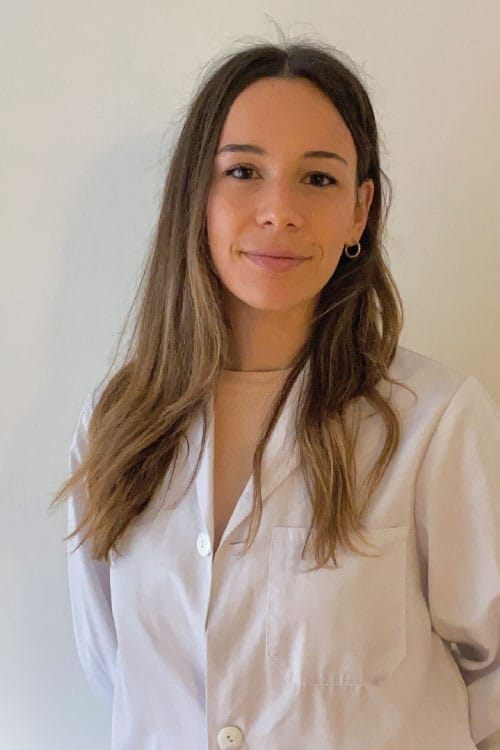
Dr Gema Arenas de Frutos
Oral and Maxillofacial Surgery · Takes part in CO2 laser assessment and treatment
ICOMEM 282869570
View medical teamPATIENT EXPERIENCES
In their own words
A patient describes her fractional CO2 laser treatment, including the first days of recovery.
It is a personal experience: recovery and results vary with skin type, area and intensity.
A patient’s experience after fractional CO2 laser (in Spanish)
FREQUENTLY ASKED QUESTIONS
Sessions, pain, results and how long they last
The questions patients ask us most before going ahead, with direct answers. Intensity and number of sessions are always decided after seeing your skin.
Is one session of CO2 laser enough?
Often, for facial rejuvenation: one medium or deep session, or two or three lighter ones if you want a shorter recovery. Acne scars, stretch marks and body areas usually need two to four sessions, one to three months apart, so the skin heals fully in between. Most people do not need more than one course; a maintenance session every few years is enough for many.
Is it painful?
With numbing cream you feel heat and a repeated pricking sensation, stronger over bony areas such as the forehead or jawline. Afterwards the skin stings like sunburn for a few hours. Cold compresses and the cream we give you settle it.
When will I see results?
Once the treated skin flakes off, at around a week, the surface looks smoother and brighter. The result that matters comes with the new collagen, between three and six months, and that is when we compare it with your first photos.
How long do CO2 laser results last?
Improvement in acne scars and stretch marks is long lasting. Rejuvenation lasts years, but your skin keeps ageing and seeing the sun, so fine lines and spots gradually return. How long it holds depends mainly on your age, your skin and how well you protect it from the sun.
How much younger will I look after a CO2 laser?
No honest doctor can give you a number. The laser improves the quality of your skin: texture, fine lines, pores and sun spots. It does not restore lost volume or lift sagging skin, which are the changes that age a face the most, so promises of “ten years younger” have no basis.
Is fractional CO2 laser worth it?
It is worth it when the problem is the surface of your skin and you can set aside a week for recovery. It is one of the best supported treatments for acne scars and sun-damaged skin. If your main concern is sagging or lost volume, another treatment will give you more.
Is CO2 laser better than blepharoplasty?
They treat different problems. CO2 laser improves fine lines and mild crepiness of the eyelid skin. Blepharoplasty removes excess skin and fat bags, which no laser can do. If the skin folds onto your lashes or you have bags, surgery is the right option, and the laser can refine the skin afterwards.
Can it be done on darker or brown skin?
Yes, with care. Darker skin types (Fitzpatrick IV to VI) are more prone to dark marks after the laser, so we use lower density, may prepare the skin beforehand and are strict about sun protection. In some cases another technique carries less risk, and we tell you so at the assessment.
Can I have it in Madrid if I live abroad?
Yes. Plan to stay in Madrid for about a week, until the new skin has formed and we have checked it, and avoid flying home with open crusts. Later check-ups can be done by video consultation. Treatment takes place at our two clinics in Madrid.
OUR CLINICS IN MADRID
Where we carry out the treatment
Fractional CO2 laser is assessed and carried out in Madrid, at our Barrio de Salamanca clinic in central Madrid and at our Aravaca-Pozuelo clinic.


YOU MAY ALSO BE INTERESTED IN
When the laser is not enough
The laser treats the surface of the skin. If the problem is excess skin or tissue that has dropped, these are the options we consider.
Eyelid surgery, for excess skin or fat bags that the laser cannot treat.
See blepharoplastyRepositions the tissues and removes excess skin when the face has dropped. The laser can then refine the skin quality.
See face liftRemoves hanging skin and repairs separated muscles after pregnancy or major weight loss, which the laser cannot do.
See abdominoplastyPersonalised assessment
Would you like to know whether CO2 laser is right for your skin?
At your first consultation we look at your skin type, the area you want to treat, your lines, scars or marks and how much downtime you can take. Then we tell you whether the laser is the right option, at what intensity and in how many sessions.
Medical assessment, an individual plan of sessions and a written quotation. If you live outside Spain, your first assessment can be done by video consultation.