Forehead implant
Forehead augmentation and contouring surgery using facial implants, with individual planning and the option of a custom 3D design tailored to the patient’s anatomy.
WHAT IS A FOREHEAD IMPLANT
A forehead implant, or frontal implant, is a facial implant placed over the frontal bone to alter its projection, volume or contour structurally. It may be considered for aesthetic or reconstructive purposes when the shape of the forehead creates a visible imbalance, depression, asymmetry or lack of continuity with the rest of the facial profile.
The forehead is not assessed in isolation. Its shape influences the transition to the supraorbital region, eyebrows, nose and overall facial profile. Before recommending an implant, the facial skeleton, soft tissues, hairline and facial proportions therefore need to be assessed.
Where greater precision is required, the implant can be custom-designed using imaging and digital 3D planning. This allows its volume, extent and transitions to be adapted to the patient’s bony surface rather than relying solely on a pre-shaped implant.
The aim is not simply to “make the forehead larger”, but to address a specific structural need while maintaining proportion with the rest of the face. The indication, material and surgical technique should be decided after an individual medical assessment.
WHEN TO CONSIDER A FOREHEAD IMPLANT
The indication depends on the anatomy, the cause of the concern and the patient’s goals. A flat, retruded, depressed or asymmetrical forehead may warrant an assessment, but not every upper-face concern is corrected with an implant.
When the frontal bone has limited projection and the upper third appears retruded in relation to the nose, cheekbones or chin.
Forehead contour irregularities that may be congenital, follow trauma or be related to previous surgery.
Differences in volume or projection between the two sides that affect the continuity of the upper third and may require a custom correction.
Certain post-traumatic or post-surgical changes, as well as structural defects, may benefit from reconstruction using an implant designed for the specific defect.
When forehead projection is out of proportion with the nose, midface or chin and a more balanced structural relationship is sought.
In selected facial surgery plans, the contour of the upper third can be modified after assessing the underlying bone anatomy and available alternatives.
TYPES OF FOREHEAD IMPLANT AT FACE CLINIC
There is no single forehead implant that is suitable for every patient. The choice depends on the anatomy, extent of correction, presence of asymmetry, material and degree of customisation required.
In straightforward cases, a pre-shaped implant may be considered. Where a closer fit to the frontal bone or a more complex correction is required, 3D planning allows an implant to be designed specifically for the patient.
Material and design are not selected in isolation: they form part of a surgical plan that considers stability, tissue thickness, implant extent, fixation and realistic goals.
Standard implant
A pre-shaped implant that may be suitable when the patient’s anatomy and required correction match the available dimensions and contour.
Discuss suitabilityCustom PEEK implant
It can be digitally designed from the patient’s bony anatomy so that its extent, thickness and contour transitions match the planned correction.
See how it is plannedCustom titanium implant
In selected cases, medical-grade titanium may be used within an individual 3D plan, particularly where design and stability require a specific solution.
Discuss my caseCustom reconstruction
For asymmetries, depressions or complex defects, the design can focus on reconstructing a specific area and restoring a smoother transition with the rest of the skull and face.
Request an assessmentHOW A FOREHEAD IMPLANT IS PERFORMED
Surgery begins well before the operating theatre. Clinical assessment, imaging and contour planning help determine whether an implant is the right option, how far it should extend and how it should integrate with the forehead anatomy.
The shape of the frontal bone, supraorbital region, hairline, soft tissues, any asymmetry, previous surgery and the relationship with the rest of the profile are assessed.
Where indicated, a CT scan and three-dimensional reconstruction are used to measure the defect, assess symmetry and plan the volume to be added.
For a custom implant, the digital design is tailored to the patient’s anatomy and reviewed before manufacture. The aim is to avoid generic volume and control the transition into adjacent areas.
The surgical approach, anaesthesia, access and fixation are determined case by case. More extensive forehead implants may require surgery in a hospital setting under general anaesthesia.
Swelling and a feeling of tightness are expected during the first few weeks. Follow-up appointments assess the scar, sensation, implant stability and how the contour evolves as swelling settles.

Dr Francisco Riba explains how custom 3D facial implants are planned around each patient’s anatomy.
BENEFITS OF A FOREHEAD IMPLANT
When appropriately indicated, an implant can structurally alter forehead projection and contour. The expected benefit depends on the starting anatomy, the chosen design and how the soft tissues settle over the new structure.
It allows controlled augmentation when the forehead is flat, retruded or lacks structural continuity.
It can smooth depressions, step-offs or irregularities of the frontal bone when the defect is suitable for implant correction.
A custom design allows each side to be treated differently when the anatomy is asymmetrical and requires a specific correction.
Forehead projection can be planned in relation to the nose, cheekbones and chin rather than assessing a single area in isolation.
With custom implants, the shape is defined over the patient’s bony surface to control extent, thickness and transitions more precisely.
Unlike resorbable fillers, an implant is intended to remain in place long term, although revision or removal may be required if a complication develops or the indication changes.
Digital planning of forehead anatomy
Custom design when indicated
Assessment of facial bone structure
Surgical setting matched to case complexity
Clinical review throughout recovery
FOREHEAD IMPLANT SPECIALISTS
Facial implant surgery requires assessment of the bony anatomy, facial profile, soft tissues and implant stability. At Face Clinic, the oral and maxillofacial surgery unit uses advanced facial planning and custom implants for selected cases.

Dr. Francisco Riba García
Medical Director and Founder of Face Clinic. Oral and maxillofacial surgeon with more than 25 years of experience, with a particular focus on facial surgery, 3D planning and custom facial implants.
ICOMEM 28375865
View medical profileOral and maxillofacial surgery unit
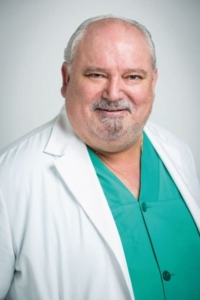
Dr. Matías Cuesta Gil
Oral and maxillofacial surgery · Facial surgery and planning of maxillofacial cases.
View profile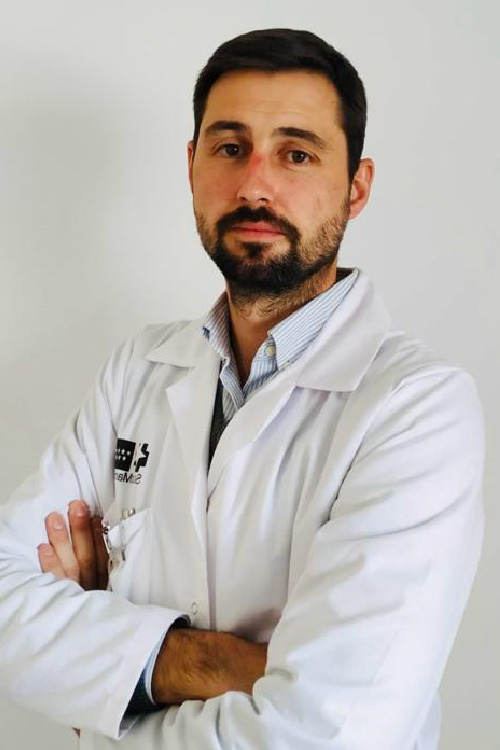
Dr. Eduardo Monteserín
Oral and maxillofacial surgery · Facial surgery, implant dentistry and complex cases.
View profile
Dr Gema Arenas de Frutos
Oral and maxillofacial surgery · Facial surgery and personalised maxillofacial treatment.
BookFREQUENTLY ASKED QUESTIONS ABOUT FOREHEAD IMPLANTS
These answers are for guidance only. The implant type, surgical approach, recovery and expected outcome depend on each patient’s anatomy and individual treatment plan.
How do I know whether I need a forehead implant or another treatment?
It depends on whether the main concern is structural. Limited bony projection, a depression or asymmetry may justify assessing an implant. If the main concern is the skin, eyebrow position, hairline or excessive bony projection, another technique may be more appropriate.
What is the difference between a standard implant and a custom 3D implant?
A standard implant has a predefined shape. A custom implant is designed around the patient’s anatomy, allowing its thickness, extent, asymmetry correction and transitions with the frontal bone to be defined individually. The choice depends on case complexity and the correction required.
What materials can be used for a forehead implant?
Depending on the indication and design, medical-grade materials such as PEEK, titanium or other biocompatible implant materials may be used. There is no single material that is best for every patient: design, stability, tissue thickness, fixation and the surgical team’s experience all need to be considered.
Will the scar be visible?
The incision can be planned within the scalp to help keep the scar away from the visible facial area. Even so, no scar can be considered completely invisible, and its appearance depends on the surgical approach, hairline, healing quality and individual factors.
Can the implant be felt?
A well-fitted implant can integrate progressively with the forehead contour, but how palpable it is depends on its design, thickness, position and the soft tissue covering it. In patients with thinner tissues, some areas or edges may be easier to feel.
How long does the result last?
Facial implants are designed to provide long-term structural correction and are not resorbed like temporary fillers. However, revision, replacement or removal may be required if a complication develops, the anatomy changes or a later medical indication arises.
How long does recovery take?
Recovery varies according to implant extent and surgical technique. Swelling, tightness, bruising or temporary changes in sensation may occur during the first days and weeks. The final contour should not be assessed while residual swelling remains.
What are the risks of a forehead implant?
As with any surgery, risks can include infection, bleeding, haematoma or seroma, altered sensation, scarring, asymmetry, contour irregularities, implant displacement or exposure, healing problems, anaesthetic risks and the possibility of revision surgery. Pre-operative assessment allows the individual risks and alternatives to be discussed.
How much does a forehead implant cost at Face Clinic?
The cost depends on the implant type, degree of customisation, required tests, implant manufacture, surgical team, anaesthesia and hospital setting. A personalised written quotation is provided after the assessment.
FACE CLINIC LOCATIONS
You can request an initial assessment at Face Clinic. For complex surgical procedures, the team will advise which location and surgical setting are appropriate for assessment, surgery and follow-up.


Request an assessment at Face Clinic to review forehead shape, bone structure, facial profile and available alternatives before deciding whether a forehead implant is an appropriate option.
Request an assessment Individual assessment, surgical planning where indicated and a personalised written quotation.