Dental veneer treatment
Personalised composite and ceramic dental veneers designed to improve tooth colour, shape and proportion while keeping your smile natural and in harmony with your features.
WHAT DENTAL VENEERS CAN IMPROVE
Dental veneers are thin restorations bonded to the visible surface of the teeth to improve aspects of the smile such as colour, shape, size or tooth proportions.
They may be used to improve discolouration, small fractures, tooth wear, irregular tooth shape, gaps or differences in tooth size, provided the dental condition and bite make veneer treatment appropriate.
The aim is not to create a standardised smile or unnaturally white teeth. Veneer shape, volume, length and shade should be planned around the natural teeth, gums, lips and facial proportions to achieve a natural, harmonious result.
At Face Clinic, we assess each smile before recommending treatment to determine which teeth should be treated, which material may be most suitable and how much healthy tooth structure can be preserved. Not every aesthetic concern requires veneers and, in some cases, orthodontics, teeth whitening or another dental treatment may be more appropriate first.
TYPES OF DENTAL VENEERS
Composite, porcelain, lithium disilicate and no-prep techniques suit different needs. The choice should not be based on price or material name alone.
The condition of the enamel, the colour to be changed, tooth shape, bite, patient habits and aesthetic goals all influence which option may be most appropriate.
We choose the type of veneer after assessing the smile, prioritising preservation of the natural tooth whenever clinically possible.
Composite veneers
Made from aesthetic resin that can be shaped directly onto the tooth, composite veneers can improve shape, proportion, small gaps or colour changes using a generally conservative approach.
Discuss composite veneersPorcelain veneers
Custom-made ceramic restorations produced in a dental laboratory. They offer high aesthetic stability and can reproduce the gloss, texture and translucency of natural enamel.
Discuss porcelain veneersLithium disilicate veneers
A ceramic option combining aesthetics and strength. It may be used when a precise restoration with natural integration into the smile is required.
Discuss lithium disilicate veneersNo-prep veneers
These are not a different material, but an approach for selected cases where tooth position and volume allow the restoration to be placed without enamel reduction or with minimal preparation.
Discuss no-prep veneersHOW DENTAL VENEER TREATMENT WORKS
Dental veneer treatment is planned individually. Before deciding on the material, the number of teeth to treat or the veneer shape, we assess the smile, teeth, gums, bite and facial proportions to aim for a natural result tailored to each patient.
We assess tooth colour, shape, size and position, as well as enamel, gums and bite. We also discuss the changes you are looking for and whether veneers are genuinely the most appropriate option.
Veneer shape, length, proportion and colour are planned around the natural teeth, gums, lips and facial features. The aim is for the result to blend with the smile rather than look standardised.
Depending on the starting point, desired result and individual characteristics, we may consider composite veneers or different ceramic options. Each material has different indications and properties.
Depending on the case, veneers may require minimal enamel preparation or, in selected cases, no tooth preparation. Once the design is agreed, the restorations are made or shaped and carefully bonded to the teeth.
After placement, we review fit, bite, gum health and aesthetic integration. Regular reviews allow us to monitor the veneers and carry out any maintenance required.

At Face Clinic, we design veneers individually, adapting their proportions and characteristics to each patient’s anatomy, teeth and smile.
DENTAL VENEERS BEFORE AND AFTER
Veneers can make visible changes to certain aspects of the smile, but every result should be considered in the context of the individual patient. The original tooth shape, position, colour, bite and number of teeth treated all influence the final outcome.
Our aim is for the change to integrate naturally with the smile and face, avoiding overly uniform or artificial-looking designs.
Discuss my smile
Composite treatment completed in one session without tooth preparation, using a conservative approach to improve smile shape and proportions.
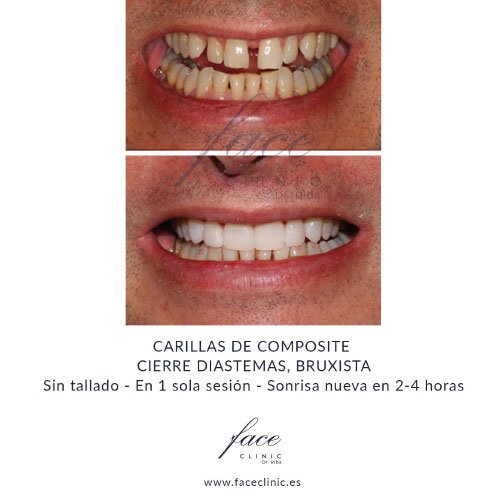
Composite veneer treatment to improve tooth proportions and the gap between the teeth in a patient with bruxism, also taking into account the forces placed on the dentition.

Case treated with porcelain veneers to improve the shape, proportions and appearance of the front teeth while aiming for natural integration with the smile.

Result immediately after bonding custom-designed lithium disilicate veneers to harmonise tooth shape, length and proportions.

Personalised ceramic treatment to improve the appearance of the front teeth, refining shape, colour and proportions in keeping with the patient’s smile.

Case in which the smile could be improved without tooth preparation, preserving the natural tooth structure and completing treatment in one session.
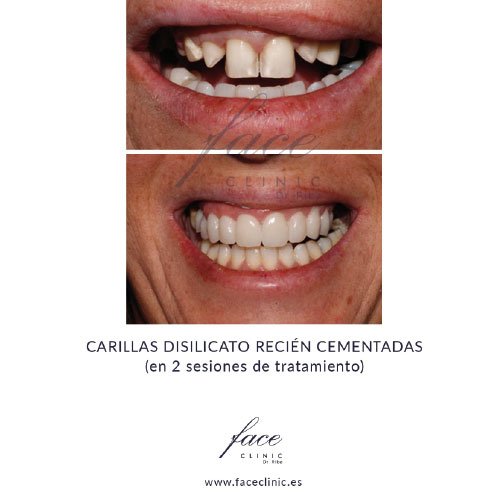
Immediate result after placement of individually designed lithium disilicate veneers, planned to achieve balanced proportions and natural integration with the smile.
BENEFITS OF DENTAL VENEERS
When appropriately indicated and carefully planned, veneers can improve several aspects of the visible teeth without requiring more extensive restorations.
Shape, length, volume and colour can be designed around the natural proportions of each smile.
One treatment can address changes in shape, size, colour or small gaps at the same time.
When clinically appropriate, veneers may require minimal preparation or, in selected cases, no tooth preparation.
Modern materials allow texture, translucency, gloss and colour to be refined so the restorations blend with the rest of the smile.
We can consider composite or different ceramic options depending on the clinical situation and aesthetic goal.
Good hygiene, regular reviews and bite monitoring help us assess the restorations and provide maintenance when needed.
DENTAL VENEER SPECIALISTS
The appearance of dental veneers depends not only on the material, but also on diagnosis, planning, bonding technique and how well the result integrates with the rest of the smile. Our aesthetic dentistry team assesses each case from both an aesthetic and functional perspective.

Dr María Ciudad Cano
Dentist specialising in oral rehabilitation and aesthetic dentistry. Her practice includes smile design, composite and ceramic veneers, restorative dentistry and personalised aesthetic and functional planning.
COEM 28008362
View medical profile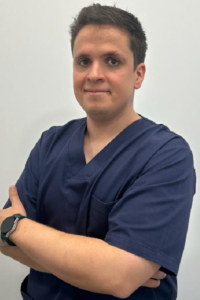

PATIENTS WHO HAVE IMPROVED THEIR SMILE
Discover the experience of patients who chose Face Clinic to improve their smile through aesthetic dental treatment.
Each treatment is planned individually, taking into account the starting condition of the teeth, smile proportions and the needs of each patient.

A patient shares her experience after choosing Face Clinic to improve her smile.

A patient shares his experience of treatment and the Face Clinic team.
FREQUENTLY ASKED QUESTIONS ABOUT DENTAL VENEERS
We answer some of the most common questions before dental veneer treatment at Face Clinic: what the assessment involves, how we plan each smile, what treatment may include and how the quotation is prepared.
What happens at the first dental veneer consultation at Face Clinic?
At the first assessment, we examine the condition of the teeth and gums, the bite, enamel, tooth shape and colour, and smile proportions. We also discuss what you would like to improve. This allows us to determine whether veneers are suitable for your case and propose a personalised treatment plan.
Who performs dental veneer treatment at Face Clinic?
Treatment is planned and carried out within our Dentistry and Dental Aesthetics Unit. The dentist assesses both the aesthetic goal and the functional condition of the mouth to design a solution tailored to each patient and, where necessary, coordinate other dental treatment before the veneers are placed.
Are Face Clinic dental veneers custom-designed?
Yes. We do not use a standard smile template. Shape, length, proportion and colour are planned around your natural teeth, gums, lips, smile and facial features. The aim is to achieve an integrated, natural-looking result rather than giving every patient the same teeth.
Can I have veneers without tooth preparation?
In some patients, veneers can be placed without tooth preparation or with minimal enamel preparation. This depends on the original position, volume and shape of the teeth, as well as the result we are aiming for. At Face Clinic, we prioritise a conservative approach and avoid removing healthy tooth structure when it is not necessary.
How many appointments will I need for dental veneers?
This depends on the type of treatment and the number of teeth being treated. Some composite veneers can be completed directly in the clinic and, in selected cases, in a single session. Ceramic veneers usually require a planning and manufacturing stage before final bonding. After assessing your case, we will explain how many appointments are likely to be needed.
Might I need other dental treatment before veneers?
Yes. Before placing veneers, we need to make sure the teeth, gums and bite are in suitable condition. If we identify tooth decay, gum inflammation, uncontrolled bruxism, a significant bite problem or tooth position that should be corrected first, we will explain which treatment should be carried out beforehand and why.
How much do dental veneers cost?
The price mainly depends on the material, the number of teeth being treated, the complexity of planning and whether any preliminary or complementary treatment is required.
As a general guide to private-market prices in 2026, composite veneers may cost approximately €250–€380 per tooth, while ceramic or lithium disilicate veneers may cost approximately €595–€850 per tooth. Some clinics and treatments may be priced above these ranges.
These figures are provided only as a market reference and are not Face Clinic prices. After your assessment, we will provide a personalised quotation based on the treatment recommended for your smile.
What is included in a Face Clinic dental veneer quotation?
After assessing your case, we will explain the treatment we recommend, the number of teeth to be treated, the indicated material and the different stages involved. Your quotation is prepared individually so you understand the proposed treatment before starting.
At which Face Clinic locations can I have dental veneers?
You can request a dental veneer assessment at our clinics with a Dentistry and Dental Aesthetics Unit. This treatment can currently be assessed in Madrid, at both Barrio de Salamanca and Aravaca–Pozuelo, and in Salamanca. You can choose the location that is most convenient when booking.
Are there follow-up appointments after dental veneers are placed?
Yes. Once treatment is complete, we review the fit of the veneers, the bite, gum health and aesthetic integration. We then recommend the appropriate dental reviews to monitor the restorations and identify whether they need any adjustment, polishing or maintenance.
FACE CLINIC LOCATIONS
Request an assessment at the clinic that is most convenient for you. Our team will assess your smile, teeth, gums and bite to determine whether veneers are suitable for your case and which type may provide the most natural result.


Request an assessment at Face Clinic. We will assess your teeth and gums, bite, and the shape and proportions of your smile to determine whether veneers are suitable and which material may be most appropriate for your case.
Request an assessment Dental assessment, personalised planning and a treatment-specific quotation.