Subperiosteal dental implants in Spain
Custom-made implant frameworks designed to fit over the surface of the upper or lower jawbone and support fixed dental rehabilitation in selected patients with severe bone atrophy.
What are subperiosteal dental implants?
Subperiosteal dental implants, sometimes described as juxtaosseous implants, are custom-made implant frameworks positioned over the surface of the jawbone and beneath the gum tissues.
Unlike conventional endosseous dental implants, they do not rely on placing several cylindrical implant bodies within the residual alveolar ridge. Instead, the framework is designed to follow the remaining anatomy of the upper or lower jaw and is secured at carefully planned fixation points.
The implant is planned from 3D CBCT data. This allows the team to assess the bone surface, nearby anatomical structures, fixation areas, prosthetic connections and the future fixed dental restoration before manufacture.
The term subperiosteal refers to the position beneath the periosteum, the membrane covering the external surface of bone. The term juxtaosseous refers to a structure positioned next to or against the bone.
Historical subperiosteal implants largely fell out of routine use after conventional osseointegrated implants became established. Modern versions have re-emerged as patient-specific devices designed with digital planning and usually manufactured additively in titanium alloy.
They are an advanced option for highly selected patients with severe dental bone loss, when conventional implants, reconstructive procedures or other advanced anchorage techniques are not appropriate or acceptable.
When may subperiosteal dental implants be considered?
They may be assessed in selected patients with advanced jawbone atrophy who require fixed rehabilitation, after comparing the reasonable surgical and prosthetic alternatives.
Substantial loss of bone height and width affecting the upper jaw, lower jaw or both.
The residual bone does not permit endosseous implants to be placed in suitable positions for the planned restoration.
Selected cases involving previous implant loss, unsuccessful grafting or unresolved complex rehabilitation.
A major bone reconstruction may be considered disproportionate, unsuitable or unacceptable after reviewing its risks and alternatives.
The patient requires replacement of multiple teeth or a complete arch with a prosthesis planned around the customised framework.
The patient must be able to maintain rigorous hygiene and attend regular surgical, periodontal and prosthetic reviews.
Subperiosteal implants are not usually the first option when there is sufficient bone for conventional implants or when a simpler treatment with stronger long-term evidence can be performed.
Custom 3D design of a subperiosteal dental implant
The framework is not selected from a standard catalogue. It is designed specifically from the patient’s residual bone anatomy and planned dental restoration.
The upper or lower jaw is digitally reconstructed to assess the residual bone and surrounding anatomy.
The bone surface and anatomical structures that must be protected are identified during digital planning.
The team defines its extension, thickness, support areas, fixation points and prosthetic connections.
The framework must reflect the future tooth position, bite, functional loads and required cleaning access.
Modern devices are commonly produced using additive manufacturing and a biocompatible titanium alloy.
The predicted fit, access, fixation strategy and prosthetic rehabilitation are reviewed before surgery.
How subperiosteal dental implant treatment is performed
Treatment combines 3D diagnosis, patient-specific design, manufacture of the framework, surgery, soft-tissue management and prosthetic rehabilitation.
The degree of atrophy, gum condition, bite, anatomical structures and available implant alternatives are assessed.
The team determines tooth position, prosthesis extension, support, bite and the connections required for rehabilitation.
The implant shape, support areas, arms, fixation points and prosthetic abutments are designed for the individual case.
The validated design is manufactured from a biocompatible material and prepared for surgical placement.
The framework is positioned beneath the soft tissues and fixed at the predetermined sites using an anaesthetic protocol adapted to the case.
Loading and prosthesis timing depend on fixation, tissue healing, functional loads and the complete treatment design.

Patient-specific planning: the framework must fit the bone surface while also supporting a functional restoration that remains stable and accessible for cleaning.
Advantages of subperiosteal dental implants
In appropriately selected patients, they may provide an implant-supported rehabilitation route when conventional options are severely limited.
They may be considered when residual alveolar bone is insufficient for conventionally positioned implants.
The framework is adapted to the individual anatomy identified through 3D imaging and digital planning.
It may provide support for a fixed dental prosthesis in selected complex cases.
For some patients, it may avoid major reconstructive procedures or several staged operations.
The framework can be planned from the outset around the future position of the teeth and prosthetic connections.
It allows assessment of anatomically complex cases that do not fit a standard implant protocol.
Coordinated maxillofacial surgery, 3D design and prosthetic planning
Treatment feasibility does not depend only on manufacturing a framework. The residual anatomy, soft tissues, fixation strategy, future prosthesis and long-term maintenance must also be assessed together.
Detailed assessment of the residual bone anatomy
A framework adapted to the individual case
Assessment of severe atrophy and complex cases
Design of the dental rehabilitation from the outset
Monitoring of the tissues, framework and prosthesis
Specialists in subperiosteal dental implants
Treatment requires coordination between oral and maxillofacial surgery, advanced implant dentistry, patient-specific design and implant-supported prosthetic rehabilitation.

Dr Francisco Riba García
Oral and maxillofacial surgeon and Medical Director of Face Clinic. He participates in the assessment of complex oral rehabilitation, pre-prosthetic surgery, jaw reconstruction and advanced bone-loss cases.
ICOMEM 28375865
View medical profileSurgery and prosthetic rehabilitation
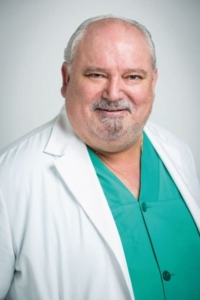
Dr Matías Cuesta Gil
Oral and maxillofacial surgery · Complex implant dentistry and pre-prosthetic surgery in severe jawbone atrophy.
View profile
Dr María Ciudad Cano
Dentistry · Implant-supported prosthetics, oral rehabilitation and functional and aesthetic prosthetic planning.
View profileHow much do subperiosteal dental implants cost?
The cost of subperiosteal dental implants cannot be compared directly with a conventional implant, because treatment requires 3D diagnosis, individual engineering and manufacture of a framework created exclusively for the patient.
The quotation depends on the arch being treated, the degree of atrophy, the extent of the framework, fixation requirements, material, surgery and the planned dental prosthesis.
Other relevant factors include anaesthetic requirements, previous treatment, management of existing implants or infection, the provisional restoration and the number of clinical and prosthetic reviews required.
An accurate cost can be established only after the CBCT scan has been reviewed, the indication confirmed and the complete surgical and prosthetic plan defined.

The quotation should specify: 3D diagnosis, design, manufacture, surgery, anaesthesia, fixation and prosthetic components, provisional or definitive restoration and follow-up.
Request a quotationRecovery after subperiosteal dental implant surgery
Recovery varies according to the extent of surgery, soft-tissue condition, treated arch, fixation strategy and prosthetic protocol.
Swelling, tightness, bruising or discomfort may occur during the first few days and are managed according to the prescribed plan.
The surgical area should not be manipulated, and hygiene and medication instructions must be followed carefully.
Food consistency is adjusted to the extent of surgery, fixation stability and whether a provisional restoration is present.
Healing around the prosthetic connections and coverage of the framework are reviewed closely.
The bite or provisional restoration may require modification to control loads during healing.
The framework, surrounding tissues and dental prosthesis require long-term clinical reviews and specific hygiene measures.
Questions about subperiosteal dental implants
These answers provide general guidance. Suitability, expected benefit, risks, timings and cost must be confirmed through an individual clinical, radiological and prosthetic assessment.
What are subperiosteal implants?
They are custom-made dental implant frameworks designed to fit over the surface of the upper or lower jawbone and beneath the gum tissues. They are secured at planned fixation points and provide prosthetic connections for a dental restoration.
Are subperiosteal implants still used today?
Yes, but they are not routine implants. Modern subperiosteal implants use CBCT imaging, CAD/CAM design and additive manufacturing to create a patient-specific titanium framework. They are reserved mainly for carefully selected cases of severe bone atrophy.
How do subperiosteal implants differ from regular dental implants?
Regular endosseous implants are placed within the jawbone. A subperiosteal implant is a customised framework positioned over the bone and beneath the gum. The two approaches have different indications, surgical techniques, maintenance requirements and evidence bases.
What are the advantages of subperiosteal implants?
In selected patients, they may support fixed rehabilitation despite severe bone loss, reduce the need for extensive grafting and allow treatment to be planned around an individual 3D reconstruction and future prosthesis.
What are the disadvantages of subperiosteal implants?
They require complex individual planning and surgery, have less long-term evidence than conventional implants and may be affected by soft-tissue exposure, infection, fixation problems and prosthetic complications. Maintenance can also be demanding.
What are the possible complications of subperiosteal implants?
Possible complications include pain, swelling, infection, soft-tissue dehiscence, exposure of part of the framework, inflammation around the prosthetic connections, loss of fixation, implant mobility and mechanical problems affecting the prosthesis.
What is the success rate of subperiosteal implants?
There is no single success rate that applies to every modern design or patient. Published short-term series often report high survival in carefully selected cases, but soft-tissue complications are clinically relevant and medium- and long-term evidence remains more limited than for conventional dental implants.
How long do subperiosteal implants last?
No fixed lifespan can be guaranteed. Longevity depends on framework design and fixation, soft-tissue stability, infection control, prosthetic loading, oral hygiene, smoking, general health and continuing professional maintenance. Long-term data on current patient-specific systems are still developing.
How much do subperiosteal implants cost?
The price depends on the diagnostic study, individual digital design, manufacture, treated arch, surgery, anaesthesia, prosthetic components, provisional or definitive restoration and follow-up. A CBCT review and complete treatment plan are required before an accurate quotation can be prepared.
Are subperiosteal implants worth it?
They may be worth considering when severe bone loss prevents a more conventional fixed solution and the expected functional benefit justifies the surgical, biological and maintenance risks. Their value should be judged against grafting, zygomatic or pterygoid implants, removable prostheses and no treatment.
What is the difference between subperiosteal and zygomatic implants?
A subperiosteal implant is a customised framework fixed over the residual jawbone. A zygomatic implant is a long endosseous implant anchored in the cheekbone and is used specifically for selected cases of severe upper-jaw atrophy. They require different anatomy and surgical planning.
What are subperiosteal implants made of?
Modern patient-specific frameworks are usually manufactured from a biocompatible titanium alloy using CAD/CAM and additive manufacturing. The exact material, surface, fixation screws and prosthetic components depend on the validated system and individual treatment plan.
Where to have subperiosteal dental implants assessed
Request a specialist assessment to review your history, CBCT imaging and the possible fixed rehabilitation options in cases of severe jawbone loss.


International patients may request an initial medical video consultation or second opinion before travelling. The definitive indication requires an in-person examination and appropriate diagnostic imaging.
Other options for advanced dental bone loss
The most appropriate technique depends on the location and extent of atrophy, residual anatomy, soft-tissue condition and the type of prosthetic rehabilitation required.
Have you been told that you do not have enough bone for dental implants?
Request an assessment at Face Clinic to review your CBCT scan, compare the available options and determine whether a subperiosteal dental implant may be appropriate.
Request an assessment Clinical and 3D radiological diagnosis, maxillofacial assessment, surgical and prosthetic planning and a personalised quotation. In-person consultation or medical video consultation for initial guidance.