Dental implants with insufficient bone
Advanced dental implant treatment for patients with insufficient maxillary or mandibular bone, using 3D assessment, surgical planning and selection of the most appropriate technique: bone regeneration, sinus lift, zygomatic implants, pterygoid implants, subperiosteal implants or other options depending on the case.
What are dental implants with little or no bone?
When we refer to dental implants with little or no bone, this does not usually mean that there is absolutely no bone. It means that the volume, height, width or quality of the available bone does not allow a conventional implant to be placed with sufficient safety and stability.
This situation may affect the upper jaw, especially in posterior areas close to the maxillary sinus, or the lower jaw, where the position of the inferior alveolar nerve and the residual bone must be assessed with precision. For this reason, diagnosis should not be based solely on a simple X-ray.
At Face Clinic, each case is studied through clinical examination, 3D CBCT, bite analysis, assessment of the required prosthesis and surgical planning. The aim is not to force a specific technique, but to choose the most predictable option to achieve fixed teeth when the anatomy allows it.
When are dental implants with little or no bone assessed?
Indication depends on the available bone, the area affected, the number of missing teeth, oral health, the prosthesis required and the patient’s general health.
Little bone in the upper jaw
Patients with posterior atrophy, a low maxillary sinus or bone loss that makes conventional implant placement difficult.
Little bone in the lower jaw
Cases in which bone height or width is limited and the relationship with the inferior alveolar nerve must be assessed.
Previously rejected for implants
Patients who have been told they do not have enough bone and need a specialist second assessment.
Unstable removable dentures
People who wear removable dentures and want to know whether a fixed or more stable rehabilitation is possible.
Advanced bone atrophy
Significant bone loss after years without teeth, periodontitis, infections, trauma or previous implant failures.
Full-arch rehabilitation
Patients who need to restore a full arch and require implant, surgical and prosthetic planning together.
Solutions when there is not enough bone for dental implants
Not all cases of insufficient bone are solved with the same technique. Some patients need bone regeneration before implant placement; others may benefit from advanced anchorage implants or from a different prosthetic plan.
The decision depends on whether the bone deficiency affects the upper jaw, the lower jaw, a partial area or a full arch, and whether the aim is an individual crown, a bridge or a full fixed prosthesis.
This classification is for guidance only. The final treatment plan is established after an individual clinical and radiological assessment.
Dental bone graft
A procedure used to increase bone volume in areas where there is not enough bone to place conventional implants.
View dental bone graftingDental bone regeneration
A technique aimed at reconstructing localised defects using biomaterials, membranes and surgical planning.
Request assessmentMaxillary sinus lift
A frequent option in the posterior upper jaw when bone height is limited by the maxillary sinus.
Sinus lift procedureZygomatic implants
Advanced anchorage implants indicated in selected cases of severe upper jaw atrophy.
View Zygomatic implantsPterygoid implants
An alternative used to take advantage of posterior areas of the upper jaw in selected cases, sometimes avoiding extensive grafts.
View Pterygoid implantsSubperiosteal implants
A personalised solution for very specific cases of severe atrophy, following digital planning and maxillofacial assessment.
View subperiosteal dental implantsDental implant procedure with little or no bone, step by step
The treatment requires diagnosis of the type of bone deficiency, a decision on whether bone must be regenerated or advanced anchorage techniques used, and coordination of surgery with the final prosthesis.
The available bone, gum tissue, bite, smile, number of missing teeth, periodontal status and the anatomy of critical areas are assessed.
The specialist decides whether the case requires grafting, regeneration, sinus lift, advanced anchorage implants or a combination of techniques.
Depending on the diagnosis, bone regeneration may be performed first, or the planned implants may be placed using a technique adapted to the patient’s anatomy.
The prosthesis is planned to restore function, stability and aesthetics, while respecting integration times and treatment safety.
Healing, hygiene, implant integration, prosthetic adaptation and the need for periodic maintenance are reviewed.

Dr Riba explains which types of dental implants may be assessed when there is not enough bone.
Advantages of assessing dental implants when there is little bone
Advanced implant dentistry makes it possible to assess alternatives for patients who may previously have been limited to removable dentures, provided that diagnosis and indication are appropriate.
Allows different strategies to be assessed when a conventional implant is not viable.
Three-dimensional assessment helps measure bone and reduce imprecise surgical decisions.
In selected cases, it may allow fixed teeth instead of unstable removable dentures.
Cases of severe atrophy are assessed from a combined surgical and prosthetic perspective.
Some patients may be assessed for advanced anchorage techniques when grafting is not the best option.
The price is defined according to technique, number of implants, surgery, prosthesis and clinical complexity.
Advanced implant dentistry with a maxillofacial approach and 3D planning
Cases with insufficient bone should not be approached as standard implant dentistry. At Face Clinic, anatomy, oral health, the final prosthesis and surgical alternatives are assessed before treatment is indicated.
3D diagnosis
Maxillary and mandibular assessment
Complete restorative plan
Oral and maxillofacial surgery
Personalised quote
Advanced implant dentistry unit at Face Clinic
Cases of dental implants with little or no bone require coordinated assessment between oral and maxillofacial surgery, advanced implant dentistry and oral rehabilitation in order to define the most appropriate surgical technique and prosthesis.

Dr Francisco Riba García
Medical Director and founder of Face Clinic. Oral and maxillofacial surgeon with experience in advanced dental implantology, 3D planning and the management of complex cases with maxillary or mandibular bone atrophy.
ICOMEM 28375865
Request assessmentUnit specialists
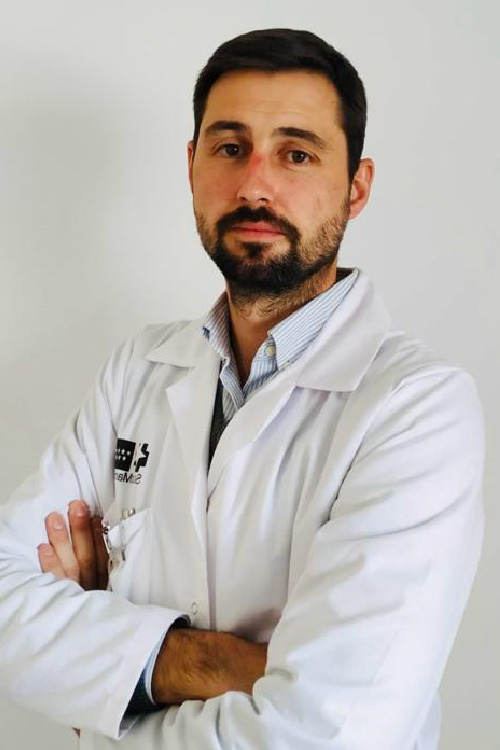
Dr Eduardo Monteserín
Oral and maxillofacial surgery · Surgical assessment of complex implant dentistry and oral rehabilitation cases.
Request assessment
Dr Gema Arenas
Maxillofacial surgery unit · Diagnosis and planning of surgical dental treatments.
Request assessment
Dr María Ciudad Cano
Dentistry and oral rehabilitation · Planning of prostheses and implant-supported restorations.
Request assessmentBefore and after dental implants in patients with little bone
Results in implant dentistry depend on diagnosis, available bone, the number of implants, prosthesis design and subsequent maintenance. In patients with little bone, planning must be especially precise in order to assess whether bone regeneration, advanced techniques or fixed implant-supported rehabilitation are required.
Request an assessment Before
 After
Case of oral rehabilitation with dental implants to restore chewing function, prosthetic stability and smile aesthetics. In patients with little bone, the technique must be decided after 3D assessment and individual surgical evaluation.
 Before
 After
Case of complete rehabilitation using a fixed implant-supported prosthesis, with personalised surgical and prosthetic planning. The possibility of providing a fixed solution in cases with insufficient bone depends on the diagnosis and the technique indicated.
Patient treated with dental implants at Face Clinic
Hear from a patient treated with dental implants and oral rehabilitation at Face Clinic.
Every case of insufficient bone requires a specific assessment to decide whether a conventional implant can be placed, whether bone regeneration is needed or whether advanced techniques should be considered.

Example experience of a patient treated with dental implants. The indication in cases with little bone may vary according to the diagnosis.
Payment facilities for dental implants with little or no bone
At Face Clinic, we offer finance options for patients who need advanced implant dentistry treatment and wish to organise payment more comfortably.
The quote is calculated on a personalised basis, as prices for dental implants with little or no bone depend on the 3D diagnosis, the technique indicated, the number of implants, the need for bone regeneration, the type of prosthesis and the surgical complexity.
Common questions about dental implants with little or no bone
Guidance only. The final indication must always be made after an individual dental, surgical and radiological assessment.
Can I have dental implants if I do not have enough bone?
In many cases, a solution can be assessed, but it depends on bone volume, the area affected, oral health, the required prosthesis and the patient’s general health. It may require grafting, regeneration, sinus lift or advanced anchorage implants.
Is a bone graft always necessary?
No. Some patients need bone regeneration, but others may be candidates for alternative techniques. The decision depends on the 3D assessment and prosthetic planning.
Are dental implants possible with little or no bone in the upper jaw?
Yes, in selected cases, sinus lift, grafting, zygomatic implants, pterygoid implants or other techniques may be assessed. The indication varies depending on whether bone is lacking in a posterior area, an anterior area or the full arch.
What if there is little bone in the lower jaw?
In the lower jaw, bone height and width must be studied precisely, as well as the relationship with the inferior alveolar nerve. Depending on the case, short implants, regeneration or other strategies may be assessed.
Can fixed teeth be achieved with severe bone atrophy?
In selected patients, this may be possible, but it should not be promised without diagnosis. Feasibility depends on anatomy, surgical technique, the planned prosthesis and the patient’s risk factors.
What is the price of dental implants with little or no bone?
There is no single price. The cost depends on whether grafting, bone regeneration, sinus lift, zygomatic implants, pterygoid implants, subperiosteal implants, the number of implants, the type of prosthesis and follow-up visits are required.
Does it involve more risks than a conventional implant?
Cases with insufficient bone are usually more complex and may require advanced surgery, more planning and specific follow-up. The specialist must explain the benefits, limits, risks and alternatives before treatment.
Can I request a video consultation if I live abroad?
Yes. Patients from outside the area can request an in-person consultation or video consultation for an initial orientation. In many cases, the assessment will need to be completed with in-person tests before the indication can be confirmed.
Where to assess dental implants with little or no bone at Face Clinic
Choose the clinic that is most convenient for your first assessment, to resolve your questions, receive personalised planning and obtain a treatment quote.

Face Clinic Madrid
Calle de Diego de León, 39
28006 Madrid

Face Clinic Madrid
Av. del Talgo, 202, L22
28023 Madrid

Face Clinic Salamanca
Plaza de los Basilios, 8
37001 Salamanca
Useful information if you are considering dental implants in Spain
These resources complement the information on dental implants with little bone, without linking to unconfirmed treatment URLs.
Would you like to know whether you can have dental implants even if you have little bone?
Request an assessment at Face Clinic to study your maxillary or mandibular bone, review advanced implant dentistry options and receive a plan adapted to your case.
Request an assessment 3D diagnosis, surgical indication and personalised quote.