Immediate-load dental implants
Treatment that may allow fixed provisional teeth to be fitted within 24 hours of implant placement when the stability achieved and the clinical conditions are suitable for immediate loading.
WHAT ARE IMMEDIATE-LOAD DENTAL IMPLANTS?
Immediate-load dental implants allow a crown, bridge or fixed provisional restoration to be connected shortly after the dental implants are placed. In selected patients, provisional teeth may be fitted on the same day or within the first 24 hours.
This does not mean that the implant integrates with the bone in one day. Osseointegration continues over the following months while the patient wears a provisional restoration designed to protect the implants during this phase.
This is why terms such as same-day dental implants or fixed teeth in one day refer to the early fitting of provisional teeth, rather than completion of the entire implant treatment within 24 hours.
It is also important to distinguish immediate implant placement from immediate loading. Immediate implant placement means that the implant is inserted during the same procedure as the dental extraction; immediate loading refers to when the restoration is connected to the implant.
WHEN TO CONSIDER IMMEDIATE-LOAD TREATMENT
Immediate loading may be considered when reducing the period without fixed teeth is particularly important, provided the clinical conditions allow the implants to be protected during osseointegration.
It may avoid a prolonged period without teeth or reduce the need for a removable provisional denture during healing.
The implants must achieve adequate stability to limit movement during the initial phase of osseointegration.
The quantity, quality and distribution of available bone are assessed in relation to the planned implant positions.
The provisional restoration must be designed to limit excessive forces during healing.
Periodontal health, infection and the condition of the surrounding tissues must be assessed before the protocol is selected.
A modified diet, careful oral hygiene and review appointments are particularly important during the first few weeks.
WHAT THE FACE CLINIC IMPLANT DENTISTRY UNIT INCLUDES
Immediate loading requires the available bone, implant positions, bite and planned provisional restoration to be assessed together.
For this reason, the Implant Dentistry Unit combines diagnosis, surgical planning and prosthetic rehabilitation to determine whether fixed provisional teeth can be fitted within 24 hours.
When the anatomy is complex or there is significant bone loss, advanced implant techniques may be required. The choice of these techniques forms part of the overall implant treatment plan; on this page we focus specifically on whether immediate loading can be performed.
Whether a provisional restoration can be connected within 24 hours is confirmed after the case has been assessed and the stability achieved by the implants has been checked.
3D radiological assessment
This allows the volume and distribution of available bone, relevant anatomical structures and planned implant positions to be assessed.
Request an assessmentPlanning the provisional teeth
The future restoration is designed before surgery so that the prosthesis, implant positions and bite are planned together.
See how we plan treatmentCoordinated surgery and implant dentistry
The surgical plan is developed from the outset with the possibility of early loading in mind.
Discuss my caseChecking implant stability
Before the restoration is connected, the team checks whether the implants have achieved sufficient stability for the planned protocol.
View the procedureFixed provisional teeth within 24 hours
When conditions are favourable, the provisional restoration may be connected on the same day or within the first 24 hours.
View casesFollow-up to the definitive restoration
After the initial stage, osseointegration and tissue healing are monitored before the definitive restoration is made.
Request an assessmentHOW WE PLAN IMMEDIATE LOADING AT FACE CLINIC
With immediate loading, surgery and prosthetic treatment are planned as parts of the same process. Implant position must be related to the planned restoration and to the forces it will receive during healing.
The first consultation reviews the oral condition, relevant medical history and the patient's functional and aesthetic requirements.
Three-dimensional imaging allows the team to assess the bone and relevant anatomical structures and plan the implant positions.
The provisional restoration is planned before surgery, taking into account appearance, the bite and the intended implant positions.
The necessary surgical procedures are carried out and the implants are placed in the positions established during planning.
The team checks the stability achieved before deciding whether it is appropriate to connect the provisional teeth.
When the case is suitable, provisional fixed teeth may be fitted on the same day or within the first 24 hours.
The implants and tissues are monitored during the osseointegration phase before the definitive restoration is made.

Dr María Ciudad explains what immediate loading means and which factors must be assessed before a fixed provisional restoration is connected.
BENEFITS OF IMMEDIATE LOADING
Immediate loading may reduce the period during which the patient is without fixed teeth by providing a provisional restoration while the implants complete the osseointegration process.
In selected cases, this may avoid a prolonged period without a fixed restoration.
The provisional restoration helps maintain the appearance of the smile while the tissues heal.
The provisional teeth remain connected to the implants and are not a conventional removable denture.
Some function can be restored early while following the recommended diet and load-control instructions.
The provisional phase allows appearance, speech and certain functional aspects to be reviewed before the definitive restoration.
Reducing the time without fixed teeth may make professional and social activities easier during osseointegration.
IMMEDIATE-LOAD DENTAL IMPLANT SPECIALISTS
Immediate-load treatment requires implant placement to be coordinated with the planned prosthetic restoration. The team therefore assesses the surgery, implant stability, bite and design of the provisional teeth together.

Dr Francisco Riba García
Medical Director and founder of Face Clinic. Oral and maxillofacial surgeon with experience in advanced implant dentistry, surgical planning and complex oral rehabilitation.
ICOMEM 28375865
View medical profileImplant dentistry and oral rehabilitation unit
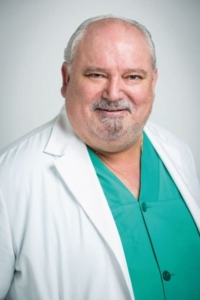
Dr Matías Cuesta Gil
Oral and maxillofacial surgery · Implant dentistry and complex case planning.
View profile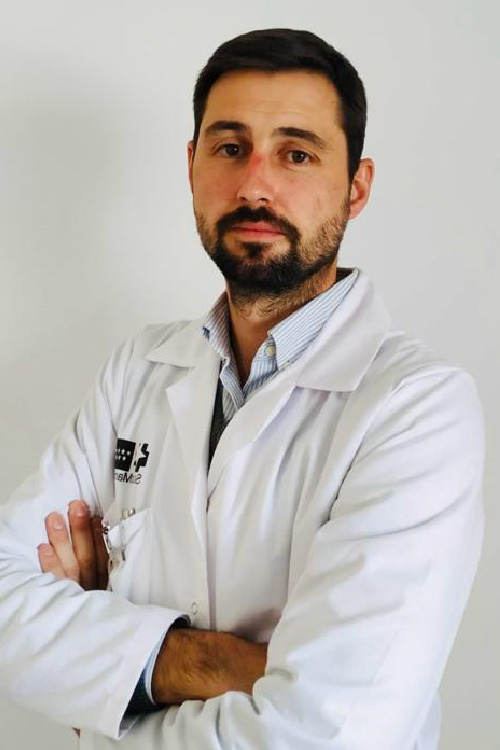
Dr Eduardo Monteserín
Oral and maxillofacial surgery · Implant dentistry, oral rehabilitation and complex cases.
View profile
Dr María Ciudad Cano
Dentistry and oral rehabilitation · Implant-supported prosthetics and functional and aesthetic treatment planning.
View profileBEFORE AND AFTER IMMEDIATE-LOAD TREATMENT
These cases show oral rehabilitations in which immediate loading allows fixed provisional teeth to be fitted during the initial treatment phase.
The initial restoration may be provisional. The definitive result is completed later, once osseointegration and tissue healing have been appropriately assessed.
Request an assessment
Full-arch rehabilitation using six implants, an immediate provisional restoration and a definitive restoration at a later stage.

Implant-supported rehabilitation with a fixed provisional restoration during the initial treatment phase.

Implant and prosthetic treatment designed to restore function and appearance using a fixed provisional restoration.
PATIENTS WHO HAVE BEEN TREATED AT FACE CLINIC
Hear from patients treated at Face Clinic within the Implant Dentistry and Oral Rehabilitation Unit.
Every case is assessed individually. These testimonials describe personal experiences and cannot predict the outcome for another patient.

A patient's experience of treatment with dental implants and a fixed restoration.

A patient's assessment of the treatment and implant rehabilitation process.

A patient's experience during treatment and the subsequent follow-up period.
FREQUENTLY ASKED QUESTIONS ABOUT IMMEDIATE-LOAD DENTAL IMPLANTS
We answer specific questions about immediate loading: when provisional teeth can be fitted, the limitations of the protocol and what happens during osseointegration.
Can immediate-load dental implants provide fixed teeth within 24 hours?
Yes. In selected patients, a fixed provisional restoration may be fitted on the same day or within the first 24 hours. Whether this is possible depends on the stability achieved by the implants and the clinical circumstances of the case.
What are the disadvantages of immediate-load dental implants?
They are not suitable for every patient. They require sufficient initial stability, careful control of the bite, a modified diet, good oral hygiene and appropriate follow-up. The teeth fitted initially are also usually provisional.
How long do immediate-load dental implants last?
Immediate loading describes when the restoration is connected rather than a different type of implant. Long-term outcomes depend on factors such as osseointegration, oral hygiene, periodontal health, the bite, individual habits and professional maintenance.
What are the specific risks of immediate loading?
During the first few weeks, it is particularly important to avoid excessive movement and forces on the implants. As with other implant treatments, complications may include healing problems, infection, failure of osseointegration or prosthetic complications.
Is the immediate dental restoration the definitive restoration?
Usually not. The first restoration is generally a fixed provisional restoration used during the osseointegration period. The definitive restoration is made later.
Are immediate implant placement and immediate loading the same?
No. Immediate implant placement means that the implant is inserted during the same procedure as the dental extraction. Immediate loading refers to when a restoration is connected to the implant.
What happens if immediate loading is not possible?
The implants can be left to heal and the restoration connected at a later stage. Choosing delayed loading is intended to protect osseointegration when conditions are not sufficiently favourable.
Can I eat normally with an immediate-load provisional restoration?
During the initial phase, a modified diet is usually recommended. Hard foods and situations that place excessive forces on the provisional teeth should be avoided.
When is the provisional restoration replaced by the definitive one?
The timing is determined during follow-up after assessing osseointegration and the healing of the gums and surrounding tissues. The timescale may vary from one patient to another.
FACE CLINIC LOCATIONS
Request an assessment to determine whether you may be suitable for immediate loading and fixed provisional teeth within 24 hours.


PERSONALISED ASSESSMENT
Request an assessment to review the available bone, expected implant stability, bite and design of the planned restoration and determine whether immediate loading may be appropriate for you.
Request an assessment Clinical assessment, 3D planning and an individual evaluation of whether immediate loading is appropriate.