All on Six Dental Implants: Fixed Teeth on 6 Implants
All on Six dental implants support a fixed full-arch restoration on six implants distributed across the jaw. Using six support points can help distribute biting forces more widely and reduce unsupported extension of the bridge. At Face Clinic, treatment is planned jointly by oral and maxillofacial surgeons and clinicians experienced in implant-supported prostheses, using 3D imaging and prosthetically driven planning.
- 6 implants per arch More support points to distribute biting forces
- Reduced cantilever Posterior support can allow the bridge to extend further back
- More support if one implant is lost Five implants may remain available while the situation is assessed
- Operating theatre and sedation Conscious sedation with an anaesthetist in Madrid and Salamanca
What All on Six is for
Fixed teeth with six implant support points
All on Six dental implants, also written All on 6, are used to replace all the teeth in one dental arch with a fixed full-arch bridge supported by six implants. The implants are distributed along the arch from the anterior region towards the premolar or molar areas, and a single screw-retained prosthesis is fitted over them.
The technique may be considered when all the teeth in one arch are missing, or when the remaining teeth cannot predictably be preserved, and it is desirable to distribute functional forces across more support points. This may be relevant in selected patients with a strong bite, bruxism, softer upper-jaw bone or a broad dental arch.
With six implants, posterior support can sometimes be extended further back, reducing the length of the unsupported part of the prosthesis, known as the cantilever. This can improve force distribution across the restoration.
However, All on Six generally requires more available bone than All-on-4 dental implants. If there is not enough bone for six implants, treatment may involve bone regeneration, a different number of implants or an advanced implant approach in selected cases.
At Face Clinic, the number and position of the implants are decided after 3D imaging and assessment of the bite, bone distribution and planned prosthesis. Six implants are not automatically better than four: the appropriate configuration depends on the anatomy and the prosthetic objectives.
Patient reviews
Top Doctors · Verified patient
I was extremely nervous about dental treatment, but conscious sedation helped me remain calm throughout the procedure.M.G. · Top Doctors
Google · Patient review
Very good. I was extremely pleased with both the care and the result.David García Sánchez · Google
Google · Patient review
Excellent care from the whole team and an excellent result.Ana María Martínez González · Google
Types of All on Six
Six implants in the upper jaw are not planned in the same way as six in the lower jaw
The upper and lower jaws differ in bone volume and density, and in the anatomical structures that must be respected during implant placement. These differences affect how each arch is planned.
The definitive prosthesis may also be made using different materials, including resin over a reinforcing framework or zirconia, depending on the bite, opposing arch, prosthetic space and clinical priorities.
Upper All on Six
Upper-jaw bone is generally less dense and the maxillary sinuses lie above the premolar and molar regions. Six implants can distribute load across more support points, but a sinus lift or bone graft may sometimes be required to place the posterior implants safely.
Lower All on Six
Bone in the lower jaw is often denser. The posterior implants are planned in relation to the inferior dental nerve, whose position is assessed using 3D imaging before surgery.
All on Six in both arches
Both arches can sometimes be treated within the same overall treatment plan. It is also possible for one arch to require six implants and the other a different configuration. The two prostheses are planned together so that the bite works as a coordinated system.
How All on Six treatment works
From 3D diagnosis to the definitive fixed bridge
The six implants are usually placed during one surgical procedure per arch. If additional bone is required, grafting may be performed during the same procedure or as a separate stage beforehand, depending on the amount and location of bone deficiency.
-
01 · Diagnosis 3D imaging and bite assessment
CBCT imaging is used to assess whether there is sufficient bone for six implants and to identify the relevant anatomical structures. The bite, smile and functional forces are also assessed.
-
02 · Planning Six implant positions, one prosthetic plan
The surgeon and restorative team plan each implant in relation to the future teeth. The treatment sequence and quotation are then provided in writing.
-
03 · Surgery Extractions and implant placement
When necessary, teeth with a poor prognosis are removed and the six implants are placed under local anaesthetic. Conscious sedation with an anaesthetist may be considered when clinically appropriate. More complex grafting cases may require a hospital setting.
-
04 · Provisional restoration Fixed provisional teeth when stability allows
If the implants achieve sufficient initial stability, a fixed provisional bridge may be fitted shortly after surgery. When grafting has been extensive or the bone is less favourable, loading may need to be delayed.
-
05 · Definitive restoration Final bridge and long-term reviews
Once osseointegration has been confirmed, the definitive prosthesis is fitted. Its material is selected according to the case and may include resin-based or zirconia options. Regular reviews and professional cleaning are then required.
Dental implant techniques
The Face Clinic team explains different implant techniques used to restore missing teeth.
Before and after All on Six
Full-arch rehabilitation supported by six implants
Full-arch rehabilitation using a fixed bridge supported by six implants. Clinical case by Dr Riba.
Tooth shape, dimensions and shade are planned according to the patient’s facial proportions, bite and prosthetic requirements.

Fixed full-arch prosthesis supported by six implants. Clinical case by Dr Riba.
Images published with the patient’s consent. Results vary between individuals.
Benefits of All on Six
More support, but greater bone requirements
Two additional implants can provide broader support for the prosthesis, but placing six implants also requires sufficient bone and may involve more extensive surgery.
-
Broader force distribution
Six implants distribute functional forces across more support points than four.
-
More posterior support
Implant distribution may allow the fixed bridge to extend further posteriorly with less cantilever.
-
Additional support points
If one implant develops a problem, five other implants may remain available while the restoration and implant are assessed.
-
No palate coverage or denture adhesive
The fixed prosthesis is screw-retained and does not rely on denture adhesive or conventional removable-denture retention.
-
Requires sufficient bone
Six implants may require bone grafting or sinus augmentation where posterior bone volume is inadequate.
-
More implant sites to maintain
Six implants require careful cleaning around each support point, together with regular professional maintenance and bite checks.
All on Six specialists
Oral and maxillofacial surgeons and implant prosthetic specialists
Planning six implants across a full arch requires detailed assessment of the maxillary sinuses, mandibular nerve, available bone and future prosthesis. Surgical placement and prosthetic rehabilitation are therefore planned together at Face Clinic.

Oral and Maxillofacial Surgery · Medical Director
Dr Francisco Riba García
Founder and Medical Director of Face Clinic. Specialist in Oral and Maxillofacial Surgery, trained at Hospital General Universitario Gregorio Marañón and Fellow of the European Board of Oro-Maxillo-Facial Surgery.
ICOMEM 28375865
View medical profile
Dr Eduardo Monteserín Martínez
Oral and Maxillofacial Surgery · implant dentistry and full-arch rehabilitation
ICOMEM 282873798
View profile
Dr María Ciudad Cano
Dentistry and oral rehabilitation · implant-supported prostheses
COEM 28008362
View profile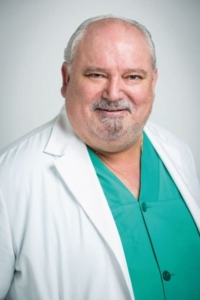
Dr Matías Cuesta Gil
Oral and Maxillofacial Surgery · advanced implant dentistry
ICOMEM 132836304
View profile
Dr Gema Arenas de Frutos
Oral and Maxillofacial Surgery · Fellow EBOMFS
ICOMEM 282869570
View profile

Dr Pilar Gómez de Liaño
Implant dentistry, dental rehabilitation and oral surgery · Salamanca
Registration no. 05006564
View profileFrequently asked questions about All on Six
What patients most often ask us
What All on Six dental implants are, how they differ from All-on-4, how many teeth they support, bone grafting, prosthetic materials, cost and where treatment is available.
What are All on Six dental implants and when are they recommended?
All on Six dental implants support a fixed full-arch prosthesis on six implants. They may be considered when all teeth in an arch are missing or cannot predictably be preserved and there is sufficient bone for six implants, or the bone can be reconstructed. Six support points may be useful in selected patients where broader force distribution is desirable.
What is the difference between All-on-4 and All on Six?
The main difference is the number and distribution of implants. All-on-4 uses four implants and often angles the posterior implants to make use of available bone. All on Six uses six support points, which can distribute forces across a wider area but generally requires more available bone. Neither option is automatically better: the choice depends on anatomy, bite and the planned prosthesis.
How many teeth are fitted on six dental implants?
A full-arch fixed prosthesis commonly replaces around 10 to 12 teeth. The exact number depends on the size of the arch, the position of the posterior implants and the design of the bridge. The aim is to provide adequate function without creating excessive unsupported extension.
Does All on Six require a bone graft?
Not always. However, placing six implants may require sufficient bone in more posterior areas of the jaw, where bone volume can be limited, particularly beneath the maxillary sinus. 3D imaging is used to determine whether bone grafting, sinus augmentation or another implant strategy is more appropriate.
Hybrid or zirconia prosthesis on six implants?
A hybrid prosthesis generally uses resin teeth supported by a reinforcing framework, whereas zirconia provides greater resistance to wear and staining. The most appropriate material depends on the bite, opposing arch, prosthetic space, aesthetic requirements, maintenance considerations and budget.
How much do All on Six dental implants cost?
As an indicative reference for treatment in Spain, complete All on Six rehabilitation may be in the region of €8,000 to €16,000 per arch. The final cost depends on the definitive prosthetic material, whether bone grafting or sinus augmentation is required, the complexity of surgery and whether sedation is included. A personalised written quotation is provided after clinical and 3D radiological assessment.
Where does Face Clinic provide All on Six dental implants?
Face Clinic assesses and provides All on Six treatment in Madrid and Salamanca. The appropriate clinic and surgical setting depend on the complexity of the case and whether additional procedures such as bone grafting are required.
Face Clinic clinics
Find the clinic that suits you
We assess and provide All on Six treatment at our two Madrid clinics and in Salamanca. Implant surgery is carried out in facilities equipped for implant treatment, with hospital treatment available for selected complex cases.


Related treatments
If you are considering All on Six, these options may also be relevant
The most appropriate full-arch solution depends on available bone, implant distribution, prosthetic requirements and whether immediate provisional teeth are clinically appropriate.
Four implants, with planned posterior angulation in suitable cases, to support a fixed full-arch bridge.
View All-on-4 dental implantsWhen fixed provisional teeth may be connected shortly after implant placement in carefully selected patients.
View immediate-load dental implantsAdvanced anchorage in the cheekbone when the upper jaw does not provide sufficient bone for conventional implant placement.
View zygomatic implantsIndividual assessment
Would you like to know whether All on Six is suitable for you?
At your first consultation we assess your mouth, bite and existing teeth or prosthesis. 3D imaging is then used to determine whether there is sufficient bone for six implants or whether another approach would be more appropriate.
3D dental assessment, coordinated surgical and prosthetic planning, and a personalised written quotation.