Cheek augmentation
Cheek augmentation can enhance projection, volume and definition in the midface using different techniques. At Face Clinic, we assess whether the concern is better suited to a non-surgical treatment such as hyaluronic acid filler, fat transfer, or a more structural surgical approach.
WHAT IS CHEEK AUGMENTATION?
Cheek augmentation includes a range of techniques designed to enhance the projection and volume of the cheekbones, or malar region. This area plays an important role in the transition between the eyes, cheeks and lower face.
Not all flat or under-projected cheekbones have the same cause. Some people have limited bony projection from an early age, while in others the change develops over time due to loss or redistribution of soft-tissue volume and other features of facial ageing.
For this reason, cheek augmentation is not simply about “adding volume”. The key is to determine whether the aim is to restore volume, improve support or change structural projection. Depending on the case, options may include hyaluronic acid, calcium hydroxyapatite, autologous fat transfer or a surgical approach.
At Face Clinic, the approach is chosen after assessing facial anatomy, symmetry, tissue quality and the relationship between the cheekbones, chin and jaw, with the aim of achieving a proportionate result that remains consistent with the patient’s features.
WHEN TO CONSIDER CHEEK AUGMENTATION
The indication depends on the cause. A cheekbone with limited bony projection is not treated in the same way as age-related volume loss. The assessment should identify what is actually changing in the midface before a technique is selected.
When the malar region has limited projection and the midface appears flat or lacks definition.
Loss or redistribution of facial volume can make the cheeks look more hollow and reduce support through the midface.
When there is a midface volume deficit and the aim is to restore support without creating an artificial change in facial expression.
Differences in projection between the two sides may require individual planning to improve facial balance.
Some people do not have volume loss but would like greater malar definition in proportion with their facial features.
When cheek projection needs to be assessed alongside the chin, jaw, nose or infraorbital area to maintain balanced facial proportions.
CHEEK AUGMENTATION OPTIONS AT FACE CLINIC
The most appropriate technique does not depend only on how much volume is wanted. First, it is important to determine whether the deficit is mainly in the bone structure, the soft tissues or both.
Face Clinic offers both surgical and non-surgical medical options, allowing different approaches to be compared within the same assessment and helping to avoid filler when the concern is primarily structural, or surgery when a more conservative treatment may be appropriate.
The material, amount and technique should be selected individually by the responsible specialist following a medical assessment.
Custom 3D cheek implants
Patient-specific malar implants designed from the individual anatomy to increase bony projection structurally. They may be considered when there is malar hypoplasia, asymmetry or a need for a stable, precisely planned correction.
View cheek implantsCheek augmentation with hyaluronic acid
A resorbable, non-surgical treatment that can add volume, enhance malar projection and contour the midface in appropriately selected patients.
Discuss cheek fillerCalcium hydroxyapatite filler
It may be used to provide support and improve midface definition, with a collagen-stimulating effect. Its indication depends on the anatomy, tissue quality and intended outcome.
Discuss filler optionsFacial fat transfer (lipofilling)
Fat transfer using the patient’s own tissue can restore volume to the cheekbones and cheeks as part of a broader facial rejuvenation or volume-restoration plan.
Discuss fat transferHOW CHEEK AUGMENTATION IS PERFORMED
The process differs significantly depending on whether treatment involves dermal filler, facial fat transfer or surgery. What all options have in common is that the decision should begin with a facial assessment rather than a predetermined amount of volume.
We assess malar projection, symmetry, soft-tissue thickness and distribution, and the relationship between the cheekbones and the rest of the face.
The assessment helps determine whether the goal can be achieved with filler, whether autologous fat transfer may be appropriate, or whether there is a structural indication for a surgical option.
For custom implants, digital 3D planning and imaging may be used. For injectable treatments, injection points, vectors and volume are planned individually.
Fillers are performed as an outpatient treatment in the consultation room. Surgical cheek augmentation requires an operating theatre and may be performed with local anaesthesia and sedation, although the anaesthetic plan can vary according to the case.
Follow-up is tailored to the technique used, allowing the team to review progress, monitor swelling where relevant and assess the result once the tissues have stabilised.

3D model used by Dr Francisco Riba when planning custom malar implants. The design allows the implant’s shape, volume and projection to be adapted to the patient’s individual facial anatomy.
CHEEK AUGMENTATION BEFORE AND AFTER
The result should integrate with the patient’s overall facial proportions. In custom implant cases, the aim is to improve projection and structural support in the midface, adapting the implant design to the individual anatomy.
In this case, we show the pre-operative appearance and the immediate result after placement of custom malar implants, while the patient is still in the operating theatre. At this stage there is swelling, and the lying position makes it difficult to assess the final outcome, but the change in cheek projection can already be seen.
Request an assessment
Comparison before treatment and immediately after placement of custom malar implants. Because the photograph was taken directly after surgery, while the patient was still lying down, it should not be interpreted as the final result. The increase in cheek projection is already visible, but the definitive outcome is assessed later, once swelling has reduced and the tissues have stabilised.
BENEFITS OF CHEEK AUGMENTATION
When appropriately indicated, cheek augmentation can improve midface projection and contribute to a more balanced appearance. The specific benefit depends on whether treatment addresses bone structure, soft-tissue volume or both.
It can enhance cheek projection and improve midface definition when there is an appropriate indication.
Cheek projection can be assessed alongside the chin, jaw and nose to improve overall facial proportions.
Where volume has been lost, appropriate treatments may help restore support in the cheeks and malar region.
Individual planning allows treatment to be adapted to differences in volume or projection between the two sides.
Different techniques allow the degree of intervention to be matched to the anatomical concern and the patient’s actual goals.
The aim is to enhance the malar region without applying the same volume or projection pattern to every face.
WHY FACE CLINIC
Cheek augmentation may involve facial surgery or aesthetic medicine. Assessing both routes within the same team helps select the technique according to the anatomical diagnosis rather than a pre-existing preference for surgery or filler.
Bone, soft tissues and facial proportions
Individual assessment before choosing a technique
Custom implant planning
Facial surgery and aesthetic medicine
Follow-up tailored to the treatment performed
CHEEK AUGMENTATION SPECIALISTS
Cheek augmentation may involve oral and maxillofacial surgery, aesthetic medicine or a combination of approaches. Dr Francisco Riba leads the planning of custom facial implant cases together with oral and maxillofacial surgeons Dr Matías Cuesta and Dr Eduardo Monteserín. Non-surgical treatments with hyaluronic acid and other fillers are provided by the Aesthetic Medicine Unit, led by Dr Andrea Nonnemacher. They form part of a wider medical team involved according to the needs of each case.

Dr. Francisco Riba García
Medical Director and founder of Face Clinic. Oral and maxillofacial surgeon with a particular focus on facial surgery, custom facial implants and digital 3D planning for the cheekbones, chin, jaw and other areas of the facial skeleton.
ICOMEM 28375865
View medical profileCheek augmentation and facial projection team
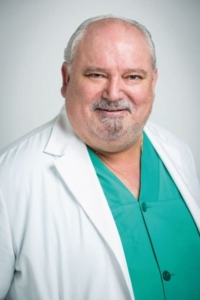
Dr. Matías Cuesta Gil
Oral and maxillofacial surgery · Facial surgery and custom facial implants.
View profile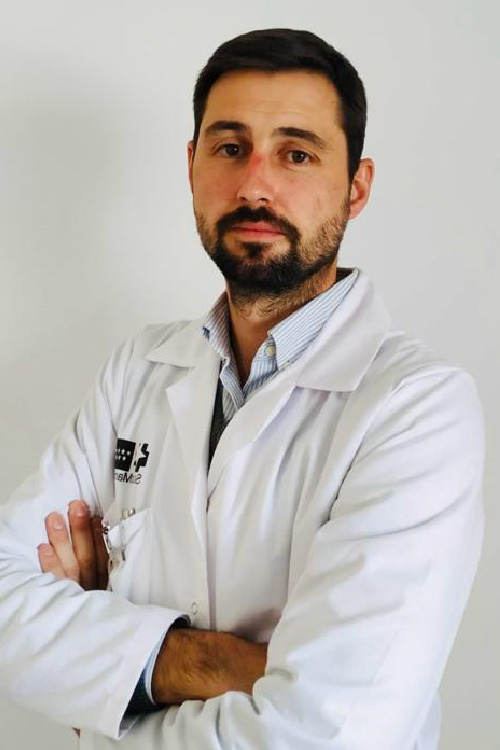
Dr. Eduardo Monteserín
Oral and maxillofacial surgery · Facial surgery, structural planning and facial implants.
View profile
Dr Andrea Nonnemacher San Julián
Aesthetic medicine · Facial harmonisation, hyaluronic acid, fillers, biostimulation and facial rejuvenation.
View profilePATIENTS TREATED AT FACE CLINIC
Hearing from other patients can help explain what the treatment process is like, particularly when surgery involves individually planned facial implants.
Testimonials reflect individual experiences and cannot predict another patient’s outcome. Indication and results depend on anatomy, technique and the progress of each case.

A patient shares her experience of treatment with custom 3D implants to improve malar projection.
FREQUENTLY ASKED QUESTIONS ABOUT CHEEK AUGMENTATION
Cheek augmentation includes procedures that differ significantly from one another. These answers provide general guidance, but the technique, product, surgical plan and cost should be defined after an individual medical assessment.
What is the difference between cheek filler and surgical cheek augmentation?
Fillers act mainly on the soft tissues and can add volume without surgery. Malar implants are positioned over the underlying bone and are intended to provide a more structural, stable change in projection. The choice depends on the anatomy and the type of change being considered.
Which is better for the cheeks: hyaluronic acid or calcium hydroxyapatite?
There is no single material that is best for every patient. Hyaluronic acid can shape and restore volume with a resorbable material, while calcium hydroxyapatite can provide support and stimulate collagen production. The choice depends on anatomy, tissue quality, treatment goals and medical history.
How much does cheek augmentation cost?
The price depends mainly on the technique used. As a general guide, cheek augmentation with hyaluronic acid may cost approximately €350–€600, depending on the product and the number of syringes required. By comparison, surgical cheek augmentation with malar implants, particularly custom 3D implants, may cost approximately €2,000–€6,000.
These figures are indicative only and do not constitute a quotation. The final cheek augmentation price can vary according to the patient’s anatomy, the material used, the amount of product, the planning required and the complexity of treatment. Following assessment at Face Clinic, the appropriate technique is discussed and a personalised quotation is provided.
How long does cheek augmentation last?
It depends on the technique. Fillers are resorbable treatments and their duration varies according to the material, treatment area, individual response and amount used. With fat transfer, part of the grafted volume may be maintained long term, while implants are intended as a stable structural correction. Duration should not be assumed to be identical for every patient.
Can cheek implants be custom made?
Yes. In appropriate cases, Face Clinic uses digital 3D planning for custom malar implants so that the prosthesis can be adapted to the patient’s anatomy and the degree of projection being addressed.
Does cheek augmentation with hyaluronic acid require surgery?
No. It is an outpatient aesthetic medical procedure performed by injection. Temporary swelling, tenderness or minor bruising may occur, and the treatment should be carried out by a medical professional with experience in facial anatomy and injection techniques.
How do I know whether I need cheek filler or a surgical implant?
The decision requires an assessment of whether limited projection is mainly related to the underlying bone, loss of soft-tissue volume or a combination of both. A proper facial assessment allows the alternatives to be compared and helps avoid treatment that is either insufficient or unnecessarily invasive.
Can cheek augmentation be combined with other facial treatments?
Yes, when clinically appropriate. Malar projection can be assessed alongside the chin, jaw, cheeks, infraorbital area or facial rejuvenation treatments. Any combination should be planned as a whole and in an appropriate treatment sequence.
FACE CLINIC LOCATIONS
You can request a cheek augmentation assessment at our clinics in Madrid, Salamanca and Badajoz. The availability of non-surgical aesthetic treatments, surgical options and individual specialists varies by location, so the appropriate clinic and specialist are confirmed when you book.


PERSONALISED ASSESSMENT
Request an assessment at Face Clinic to review malar projection, soft-tissue volume, symmetry and facial proportions, and to determine which cheek augmentation approach may be appropriate for your case.
Request an assessment Medical assessment, individual treatment indication and a quotation tailored to the technique and each patient’s needs.