Titanium dental implants: why titanium is the most widely used material in implant dentistry
Titanium is one of the most widely used materials in dental implantology. When we talk about a titanium dental implant, we are referring to a fixture that is placed in the maxillary or mandibular bone to replace the root of a missing tooth and support a crown, bridge or dental prosthesis.
Its use is not only a matter of clinical tradition. Titanium has become established over decades because of its biocompatibility, its ability to integrate with bone and its resistance within the oral environment. Even so, not all patients need the same type of implant or the same planning. The material is important, but it is not the only factor that determines the outcome.
In this article, we explain what a titanium dental implant is, how long it can last, what advantages it offers, what it may cost and when it may be appropriate to consider alternatives such as zirconia dental implants.
What is a titanium dental implant?
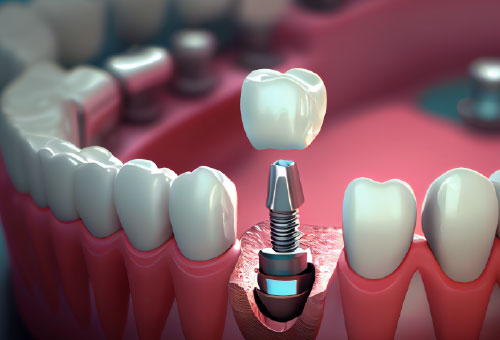
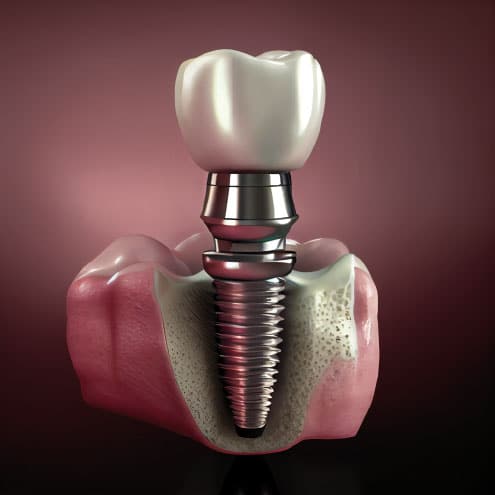
A titanium dental implant is a structure, usually screw-shaped, that is inserted into the bone to replace the root of a missing tooth. A prosthetic connection is then placed on the implant and, finally, a crown, bridge or fixed prosthesis, depending on the case.
It is useful to distinguish between three parts of the treatment:
- The implant: this is the fixture placed inside the bone. It is usually made of titanium or titanium alloys.
- The abutment or connection: this joins the implant to the prosthesis.
- The crown or prosthesis: this is the visible part that replaces one or several teeth.
For this reason, when a person searches for titanium screw for dental implant price, they are actually referring to only one part of the treatment. The final cost does not depend only on the screw, but also on the diagnosis, surgery, digital planning, prosthesis, laboratory work, maintenance and the anatomical complexity of the case.
If you would like general information about the full treatment, you can visit the Face Clinic page on dental implants. This article focuses specifically on the material: titanium.
Advantages of titanium implants
Titanium is one of the most widely used materials in dental implantology because it has several characteristics that are favourable for oral rehabilitation. Its main advantages are the following.
1. Biocompatibility
Biocompatibility means that the material can remain in contact with the body’s tissues with good biological tolerance. In dental implantology, this is essential because the implant must integrate with the bone and coexist with the gums and oral tissues for many years.
2. Ability to osseointegrate
Osseointegration is the process by which bone attaches to the surface of the implant. This process allows the implant to become stable and act as a support for the prosthesis. Titanium has shown favourable behaviour in this regard, especially when used with treated surfaces and appropriate surgical protocols.
3. Mechanical strength
The mouth is exposed to chewing forces, pressure, mandibular movements and, in some patients, overload caused by bruxism. Titanium provides good mechanical strength, making it a suitable material to support single crowns, bridges or more extensive rehabilitations.
4. Clinical versatility
Titanium implants can be used in many different situations: replacing a single tooth, replacing several missing teeth, full-arch rehabilitations, immediate loading or advanced techniques in patients with limited bone. The specific indication always depends on the individual diagnosis.
5. Extensive clinical evidence
One of the reasons titanium remains so widely used is the extensive clinical and scientific experience regarding its medium- and long-term behaviour. This does not mean that all implants last the same length of time, but it does mean that the material has been widely studied and its use is well established in modern implant dentistry.
What role does the titanium screw play in a dental implant?
The term titanium screw is often used to refer to the implant. However, from a clinical point of view, the treatment is not simply about placing a screw. The implant must be correctly positioned according to the available bone, gum tissue, bite, future prosthesis and smile aesthetics.
The position of the implant affects the final result. An implant that has integrated well but is poorly positioned can make the prosthesis more difficult, compromise hygiene or lead to functional problems. For this reason, at Face Clinic each case is assessed through a clinical examination, radiological tests and individualised planning before treatment is indicated.
In selected cases, planning may allow treatments such as immediate loading dental implants, where a provisional prosthesis is placed within a short period of time. Not all patients are candidates; this depends on primary stability, bone quality, implant distribution and the type of prosthesis.
How long does a titanium dental implant last?
One of the most common questions is: how many years does a titanium dental implant last? The accurate answer is that it can last many years, even decades, but the same duration cannot be guaranteed for every patient.
Implant survival depends on several factors:
- Quality and quantity of available bone.
- Surgical and prosthetic planning.
- Control of the bite and bruxism, if present.
- Daily oral hygiene.
- Absence or control of periodontal disease.
- Regular check-ups and professional maintenance.
- Smoking and other patient-related medical factors.
It is important to distinguish between the implant and the crown. The implant is the part that remains inside the bone; the crown or prosthesis is the visible part and can undergo wear over time. In many patients, the implant can remain stable for many years, while the crown may need repair or replacement sooner.
Therefore, when discussing longevity, it is not enough to ask how long titanium lasts. The whole system must be assessed: implant, bone, gum, prosthesis, hygiene, check-ups and bite forces.
Cost of a titanium dental implant
Another frequent search is: how much does a titanium dental implant cost? The price should not be assessed only according to the titanium screw, because the full treatment usually includes several stages and components.
The budget may be affected by factors such as:
- Whether it is a single implant or several implants.
- The type of prosthesis: single crown, bridge or full-arch prosthesis.
- The need for a previous extraction.
- The amount and quality of available bone.
- The need for bone regeneration, sinus lift or other complementary techniques.
- The type of prosthetic material used.
- The surgical complexity of the case.
- The need for conscious sedation or an operating room.
For this reason, two patients searching for titanium dental implant cost may receive different treatment plans and budgets. Replacing one posterior tooth with good bone conditions is not the same as rehabilitating a full arch or treating a case with severe bone atrophy.
At Face Clinic, the assessment makes it possible to determine whether the patient needs a conventional implant, a broader rehabilitation or an advanced technique.
Titanium or zirconia implants: which material is better?
There is no single best material for every patient. Titanium remains the most widely used material and has the longest clinical track record, while zirconia may be considered in certain cases for aesthetic, biological or patient-preference reasons.
In general terms:
- Titanium stands out for its strength, versatility, clinical experience and capacity for osseointegration.
- Zirconia may be of interest in specific aesthetic areas or in selected patients, although its indication must be assessed case by case.
The decision should not be based only on the material, but on the full diagnosis: the position of the missing tooth, gum type, gingival biotype, available bone, aesthetic requirements, bite forces and type of prosthesis.
In some cases, titanium may be the more appropriate option; in others, zirconia may be considered. The key is to individualise the indication.
Possible disadvantages and risks of titanium implants
Titanium implants have high clinical acceptance, but no implant treatment is completely risk-free. Complications usually do not depend only on the material, but also on the patient’s oral condition, the technique, planning and maintenance.
Possible problems include:
- Failure of osseointegration: the implant does not integrate correctly with the bone.
- Peri-implantitis: inflammation and infection around the implant with bone loss.
- Overload due to bruxism: excessive forces that can affect the prosthesis or the implant.
- Prosthetic problems: wear, fracture or misfit of the crown or prosthesis.
- Aesthetic complications: especially in visible areas if there is gum or bone loss.
- Sensitivity or reaction to the material: this is uncommon, but should be assessed if there is clinical suspicion.
To reduce risks, it is essential to carry out an adequate diagnosis, plan the surgery properly, control periodontal health and maintain regular check-ups.
How to know which titanium implant is best for each patient
The best titanium dental implant cannot be chosen based only on brand, price or size. The choice depends on the patient’s anatomy and the rehabilitation that needs to be performed.
The specialist must assess:
- The height, width and density of the bone.
- The position of the maxillary sinus or the inferior alveolar nerve.
- The space available for the crown.
- The bite and functional habits.
- The aesthetics of the gums and smile.
- The number of missing teeth.
- The need for a fixed, removable or full-arch prosthesis.
In patients with limited bone, specific techniques may be considered. For example, treatments with zygomatic implants, pterygoid implants or subperiosteal implants may be assessed, but these are advanced procedures that require a precise indication.
The goal is not simply to place a titanium screw, but to plan a stable, functional, cleanable rehabilitation adapted to the patient.
Assessment of titanium dental implants at Face Clinic
At Face Clinic, we assess each case individually to determine whether the patient is a candidate for a titanium dental implant, which type of implant is appropriate and which prosthesis may provide greater long-term stability.
The assessment may include an oral examination, radiological study, bite analysis, periodontal review and digital planning. In complex cases, the approach may require coordination between dentistry, implantology, oral surgery, maxillofacial surgery and dental prosthetics.
If you would like to know which option is suitable in your case, you can request an assessment at Face Clinic.
Frequently asked questions about titanium dental implants
What is a titanium dental implant?
It is a fixture, usually screw-shaped, that is placed in the bone to replace the root of a missing tooth. A crown, bridge or prosthesis is then placed on the implant.
How many years does a titanium dental implant last?
It can last many years, even decades, if it is well planned and the patient maintains good hygiene, regular check-ups and control of risk factors such as periodontal disease, smoking or bruxism. The crown may need to be replaced before the implant.
How much does a titanium dental implant cost?
The cost depends on the number of implants, the prosthesis, the need for bone regeneration, surgical complexity and the tests required. The price should not be assessed only according to the titanium screw, but according to the full treatment.
How much does a titanium screw for a dental implant cost?
The screw is only one part of the treatment. The final cost includes diagnosis, planning, surgery, prosthetic components, crown or prosthesis and follow-up visits. For this reason, a personalised estimate is necessary.
Is a titanium dental implant safe?
Titanium is a widely used material in dental implantology because of its biocompatibility and capacity for osseointegration. However, treatment safety also depends on diagnosis, surgical technique, the patient’s oral health and subsequent maintenance.
Which is better, a titanium or zirconia implant?
There is no single answer. Titanium has a very long clinical track record and great versatility. Zirconia may be considered in selected cases, especially for aesthetic reasons or patient preference. The choice should be made by the specialist after studying the case.